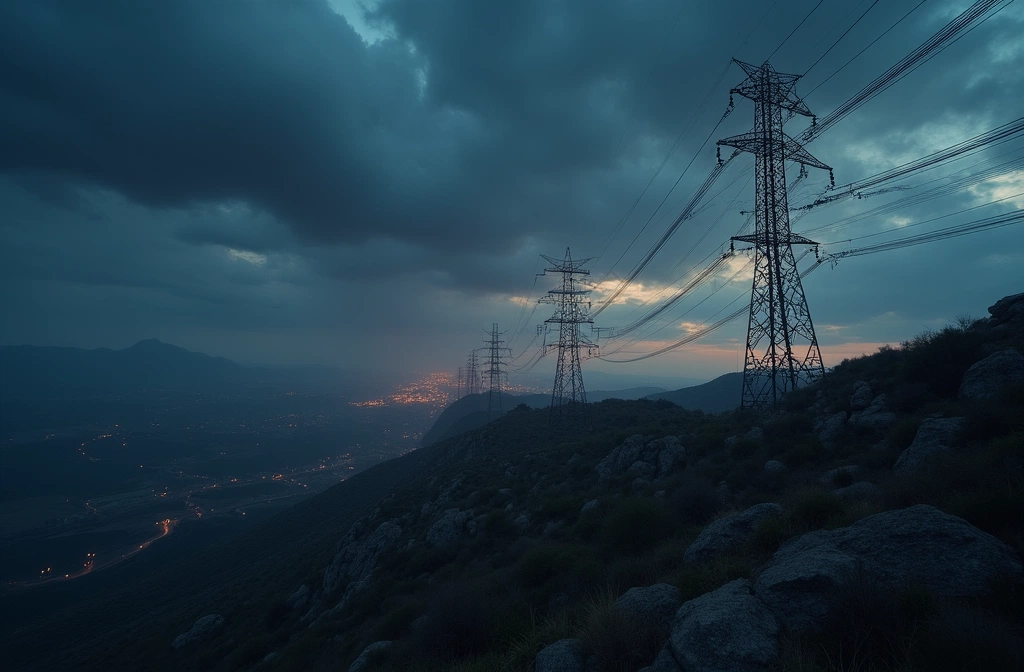
The Iberian Peninsula blackout of April 2025 has emerged as a critical case study in grid resilience—not because it revealed a simple vulnerability, but because it exposed the complexity operators face during the transition to renewable energy infrastructure.
According to ENTSO-E's final report on the event, the blackout resulted from a combination of interacting factors rather than any single cause. The investigation identified oscillations, gaps in voltage control, and reactive power management issues as contributing elements to the cascade.
This matters because it challenges oversimplified narratives about grid stability. As renewable sources proliferate, the grid's behavior becomes less predictable in conventional terms. Voltage and reactive power—technical parameters that legacy coal and natural gas plants managed through their mechanical properties—now require active, deliberate control systems. When those systems interact under stress, the outcomes may not be intuitive.
The April 2025 event suggests the grid's vulnerability during transition is not primarily about capacity or generation sufficiency, but about control architecture and the speed at which operators can respond to cascading instabilities. Cyber risk compounds this: if attackers target voltage regulation or reactive power systems rather than generation capacity itself, they may trigger failures that look technical but operate through the same interaction patterns ENTSO-E documented.
Supply chain exposure is another layer. Modern grid stability depends on sensors, communications hardware, and control systems that are globally sourced and increasingly digitized. Disruption to those supply chains may reduce redundancy in exactly the control systems that prevent oscillations.
What to watch: Grid operators' investment in real-time monitoring and faster-response control systems. The interval between detection and mitigation in cascading events is narrowing. If that interval shrinks below operator reaction time, automated failsafes become critical—and their absence is a leading indicator of systemic risk.
