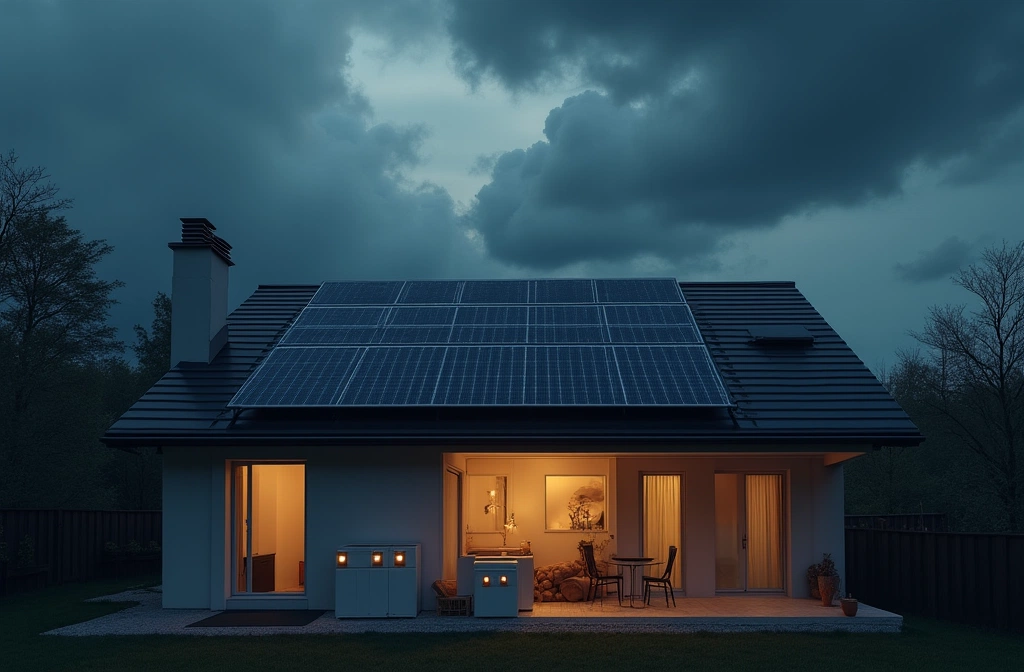
Here's the operational reality: a standard grid-connected solar system will shut down during a grid outage—even when conditions are optimal for generation. According to SunSent, this isn't a failure; it's by design. Grid-tied inverters are engineered to disconnect from dead lines for safety reasons, preventing backfeed into utility infrastructure where lineworkers may be present.
For preparedness planning, this matters. Many homeowners assume solar panels equal automatic resilience. They don't—not without the right architecture.
The workaround exists but requires deliberate specification: SunSent notes that homeowners who pair solar with compatible battery storage and backup equipment retain the ability to power essential loads during an outage. This hybrid approach decouples your critical loads from grid dependency while maintaining normal grid operation during normal times.
Why this distinction is strategically important: as grid reliability pressures mount—whether from weather events, infrastructure strain, or extended maintenance windows—the difference between grid-tied-only and grid-tied-plus-storage becomes a material preparedness variable. A system without batteries offers zero resilience benefit when it's needed most. A system with properly sized batteries and a backup controller becomes a functional microgrid.
This is emerging signal noise in a broader infrastructure conversation. It's not a threat in itself. It's a clarification of a widespread misconception that could affect investment decisions for readers building long-term energy resilience. The market is clearly addressing this gap—vendors are actively promoting integrated solar-plus-storage solutions—but adoption rates and homeowner awareness remain inconsistent.
The takeaway is straightforward: if backup power during outages is part of your preparedness architecture, solar-only installations don't deliver that outcome. Battery integration is the load-bearing component.
