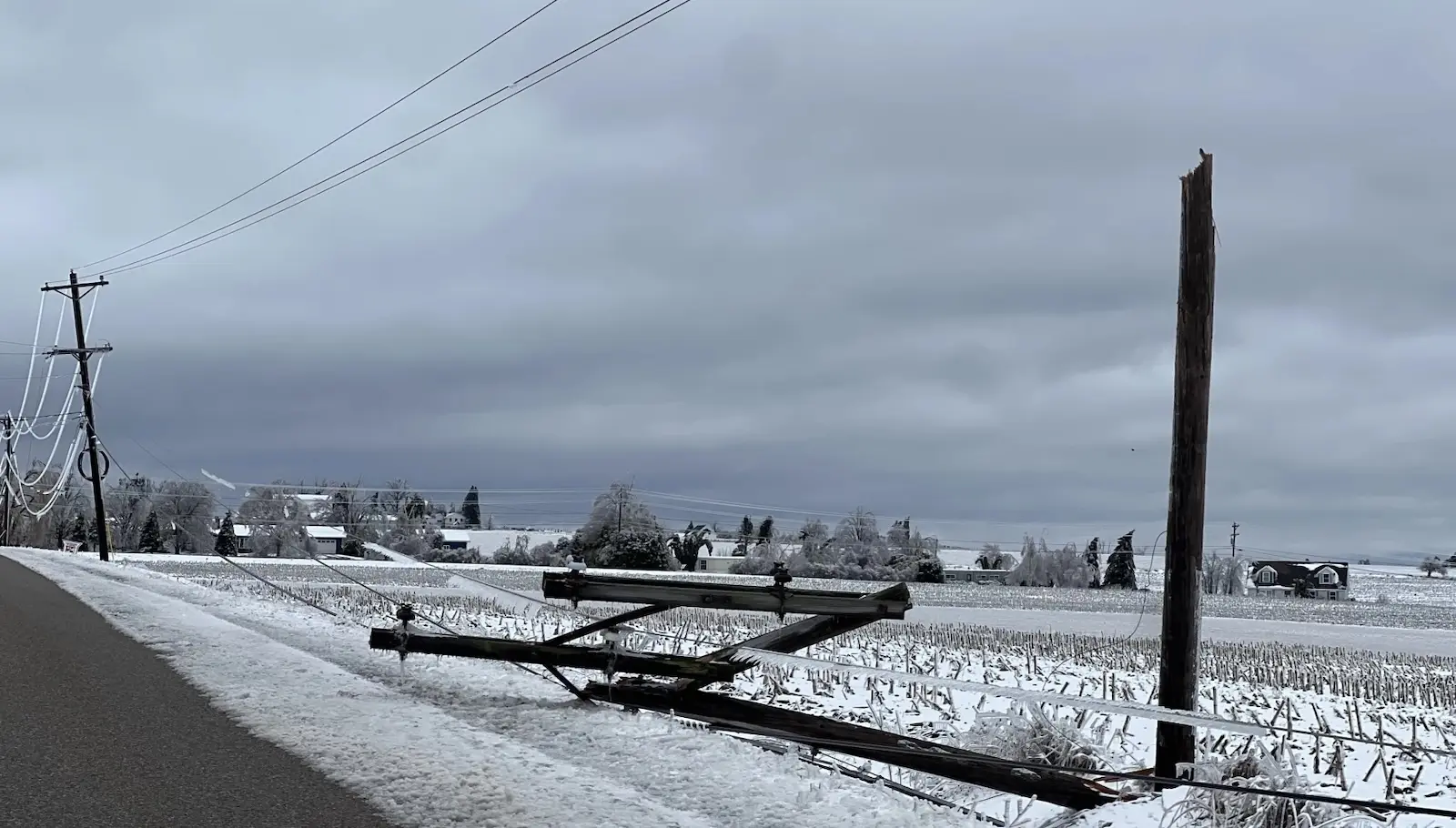
According to Grist, power lines across the United States—much of it built over half a century ago—face mounting pressure from climate impacts. Stronger storms and heavier precipitation now trigger hundreds of outages annually, many caused by trees falling on above-ground infrastructure.
The catalyst: In March 2025, a devastating ice storm struck northern Michigan, downing trees and snapping utility poles. The result was widespread blackouts lasting weeks in affected communities, including Lewiston.
The response appears measured but reveals a deeper infrastructure challenge. Some northern Michigan utilities are now examining underground power lines as a concrete solution to reduce weather-related outages. Burying lines is operationally simple—it removes the exposure to falling trees and ice accumulation that plague overhead systems. The obstacle is cost. Grist's reporting indicates this approach, while straightforward, carries significant financial burden that complicates rapid deployment.
Why this matters: The U.S. grid is fundamentally vulnerable to climate escalation. With infrastructure largely designed for 20th-century weather patterns, utilities face a choice: incremental hardening of existing systems or structural redesign. Underground lines represent the latter—more resilient but requiring capital investment at scale that most utilities have not yet mobilized.
The Michigan case is a canary. One region's ice storm becomes a test case for grid modernization. If utilities can demonstrate cost-effective underground deployment, it could establish a model. If costs remain prohibitive, aging overhead systems will continue bearing increased weather stress.
What to watch: Monitor whether Michigan utilities publish feasibility studies or timelines for underground conversion projects. Watch for similar initiatives in other climate-vulnerable regions (Northeast, Southeast, Pacific Northwest). These will signal whether grid modernization is beginning or remaining rhetorical.
