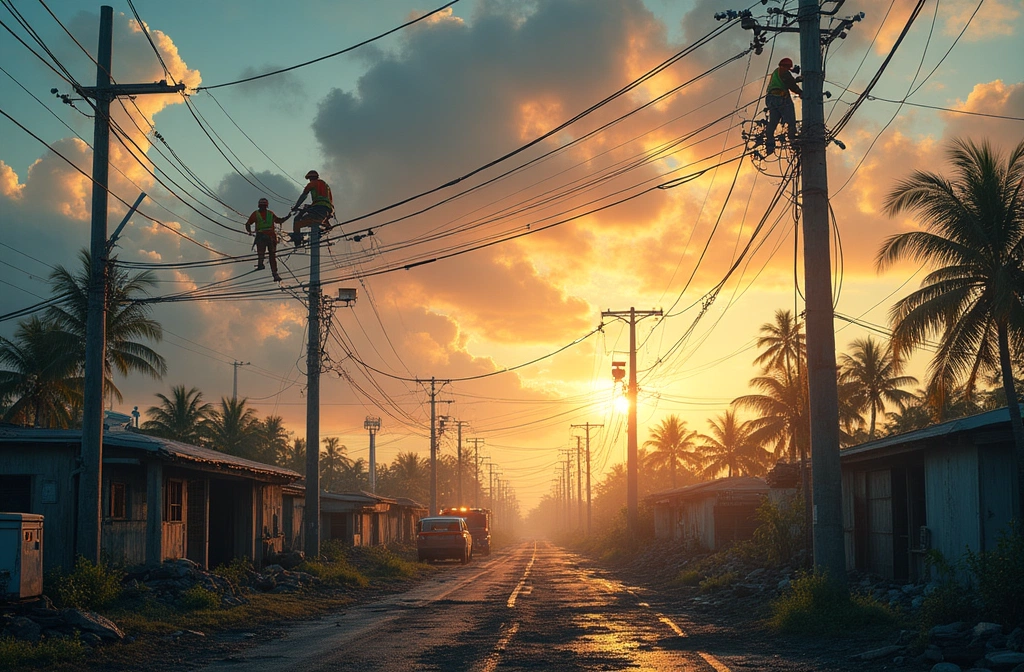
According to a media release from Guam Power Authority (GPA), power restoration following storms follows a tiered priority system. Critical infrastructure facilities—communications, schools/shelters, public safety and health facilities, and ports of entry—receive restoration priority first. Only after these systems are operational does GPA proceed to restore automated meter infrastructure (smart meter networks) and supervisory control and data acquisition (SCADA) systems, which manage grid operations and monitoring.
This hierarchy exposes a structural dependency: communication systems must be restored before grid automation can function effectively. SCADA systems depend on both power and communications to provide real-time visibility and control. Smart meter infrastructure follows in the sequence, suggesting it's classified as secondary to active grid management during recovery.
For preparedness analysis, this reveals what utilities consider non-negotiable: you cannot manage what you cannot see or communicate about. The prioritization of ports of entry alongside shelters and health facilities indicates recognition of supply chain vulnerability during extended outages.
The practical implication: in a widespread outage affecting Guam or similar island/isolated grid infrastructure, communications restoration is the actual bottleneck to full grid recovery—not generation capacity or physical damage alone. This is worth monitoring in other utility district protocols, as it suggests where systemic fragility exists during multi-day scenarios.
GPA's public acknowledgment of this sequencing is unusual transparency. Most utilities do not publicly detail restoration hierarchy, making this documentation valuable for understanding how regional grids actually prioritize recovery.