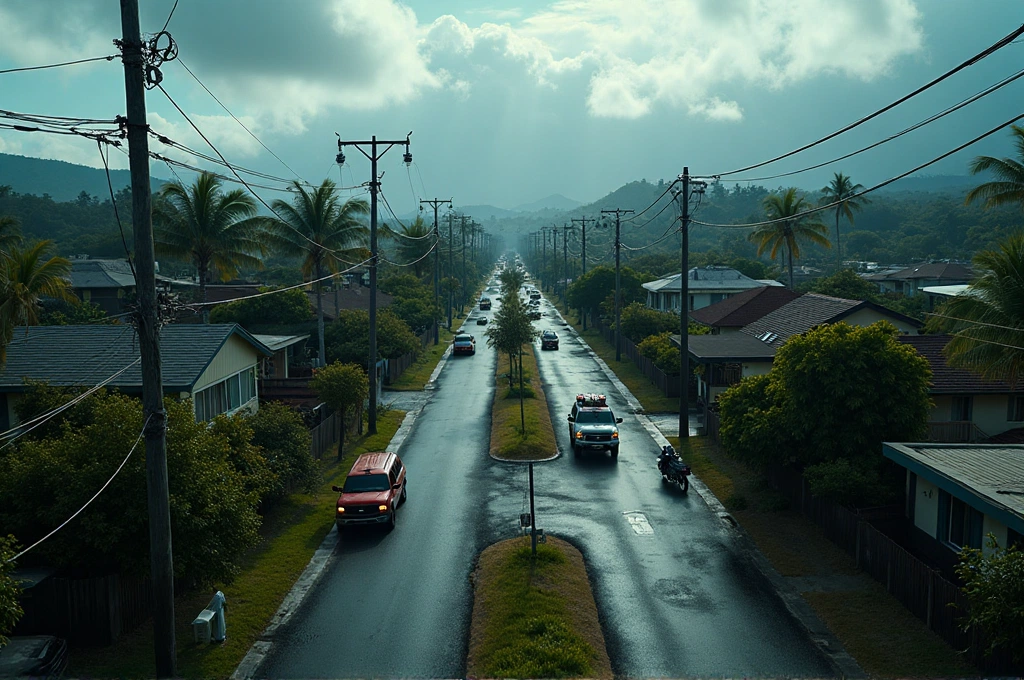
Tropical Storm Lala inflicted extensive damage to Hawaii's electrical grid, according to Bloomberg and TechTimes reporting. At the height of the outage, 250,900 Hawaiian Electric customers lost power statewide — described as the largest outage in Hawaii's modern history. As of the latest update, more than 113,000 homes and businesses remained without service, with some customers facing potential months without electricity to restore damaged infrastructure.
This event matters for grid resilience assessment. Hawaii's electrical system, already operating in isolation as an island grid dependent on fuel imports and distributed generation, now faces a sustained recovery window. The combination of widespread damage and repair timelines measured in months signals infrastructure vulnerability to weather events in regions with limited redundancy and supply chain constraints.
Rural areas, particularly on the Big Island, appear to have experienced disproportionate impact according to TechTimes, suggesting geographic variation in grid hardening and restoration capacity — a pattern worth monitoring as utilities assess post-event priorities.
The scale of simultaneous customer loss (250,900 at peak) also underscores a preparedness reality: when infrastructure fails at this scale in an island system, backup power, water reserves, and supply chains become critical variables for households and businesses. Recovery from grid damage of this magnitude is not measured in hours.
Watch for: repair timeline updates from Hawaiian Electric, restoration prioritization decisions (critical infrastructure vs. residential), and whether cascading failures emerge in water systems, fuel distribution, or medical facilities dependent on grid stability.
