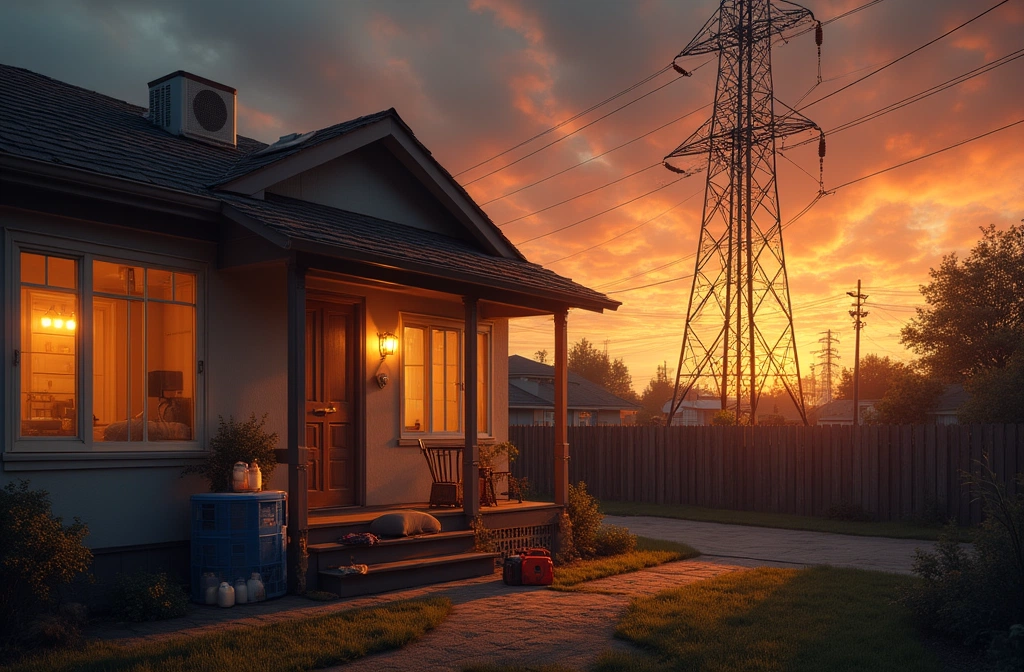
According to ChaseDay.com, power grid failures during extreme heat events represent a convergence of two critical stressors: peak demand on stressed infrastructure and the body's inability to shed heat without air conditioning. The publication identifies the core problem clearly: a well-prepared home can mean the difference between managing discomfort and facing a genuine health emergency.
ChaseDay.com recommends three categories of action. First: stock essentials ahead of time—the implication being that supply chains tighten during crisis periods, and last-minute purchases fail. Second: improve home insulation and passive cooling capacity before the event, not during it. Third: establish backup cooling methods that don't depend on grid power—these become the margin between survivable and critical conditions when ambient temperatures exceed safe indoor thresholds.
A fourth element ChaseDay.com emphasizes deserves attention: community situational awareness. Neighborhoods that maintain visibility on vulnerable populations—elderly residents, those with medical equipment dependency, families without resources for emergency cooling—improve collective survival outcomes. This isn't altruism; it's infrastructure redundancy at the social layer.
Why this matters now: Heat-driven grid stress is not hypothetical. Peak summer demand already forces rolling blackouts in regions with vulnerable generation capacity. Combined with aging transmission infrastructure and increasing extreme weather patterns, the probability of simultaneous heat waves and grid failures is no longer negligible.
The practical signal here is timing. Preparation during normal conditions costs time and modest resources. Preparation during a heat emergency, with power offline and outdoor temperatures dangerous, costs lives. ChaseDay.com's framework suggests the window to act is now—before the next concurrent heat event and grid stress cycle arrives.
