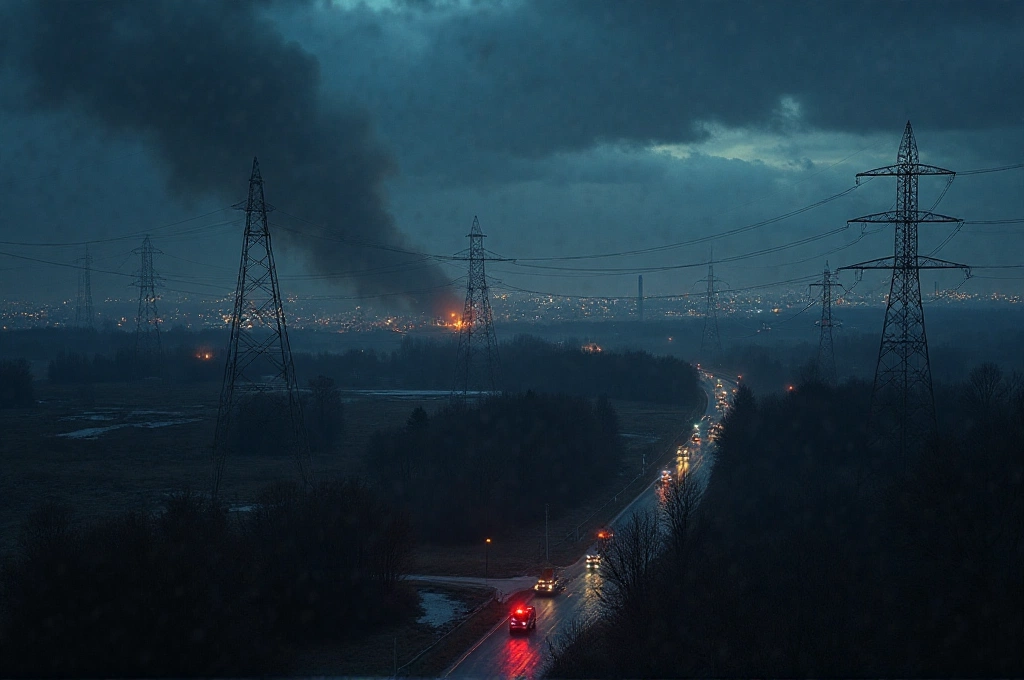
УНН reported on August 18, 2026, that hostile military action left residents across six regions without electricity. The source indicates that no further outages were forecast for that day, and that power consumption had increased due to cloud cover conditions.
This event matters because distributed power losses across multiple regions—even partial—signal two operational realities: (1) critical infrastructure remains a valid military target in active conflict zones, and (2) grid operators are managing demand and restoration in real time under active threat.
The fact that УНН specifically noted "no outages forecast today" suggests grid management is actively monitoring load and supply. However, the brevity of available reporting means key details remain unclear: whether losses were from direct strikes, cascading failures, or temporary disconnections; restoration timelines; and whether backup systems or distributed generation kicked in to stabilize load.
Historically, distributed regional power losses in conflict zones follow a pattern: initial strikes, manual switchover and load-shedding, then gradual restoration—but each cycle degrades grid resilience. Ukraine's power infrastructure has absorbed sustained targeting since 2022, and each event compresses recovery margins. This August 18 incident fits that trajectory.
For preparedness purposes, this illustrates why regional power outages in conflict zones can cascade unpredictably. Even "managed" outages mean hospitals, water treatment, heating, and communications face battery/generator dependency. Civilian populations in affected regions should assume:
- Battery and fuel reserves are being consumed in real time
- Restoration priorities follow military and critical-infrastructure logic, not residential schedules
- Cloud cover or weather changes can alter grid demand within hours
Watch for pattern signals: frequency of attacks, number of regions affected per incident, and restoration speed. Shortening recovery windows suggest either grid hardening or depletion of redundancy. Either tells you something about infrastructure stress.
