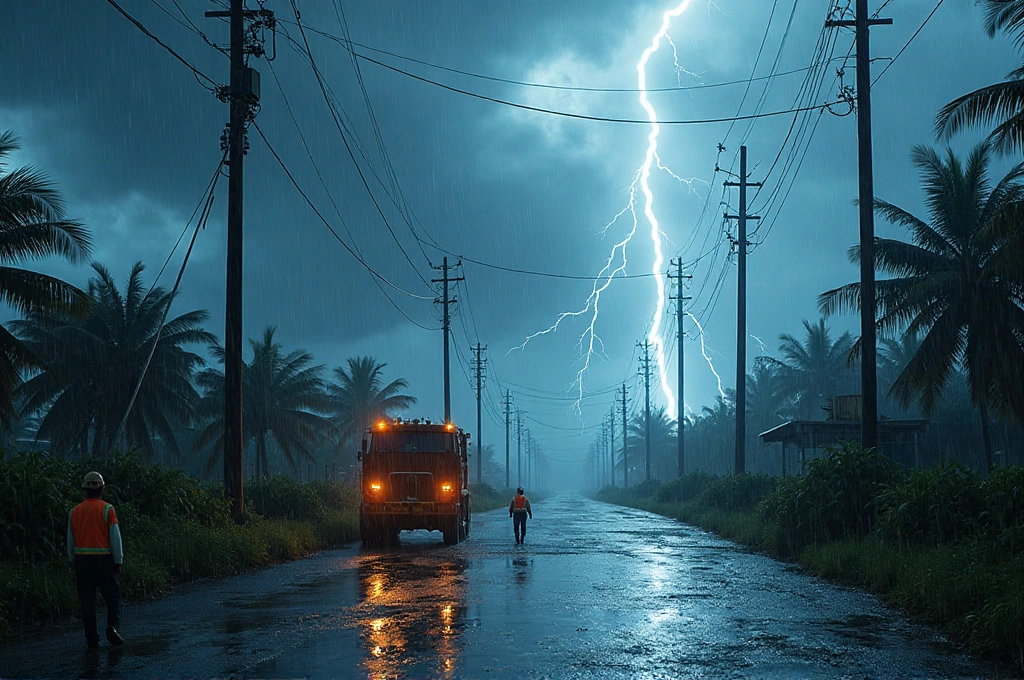
According to The Economic Times, Hurricane Lala caused widespread power loss affecting approximately 130,000 utility customers in Hawaii. The storm damaged homes, created flooded roads that restrict travel and emergency access, and generated hazardous conditions that prompted officials to urge residents to remain indoors.
The critical constraint here is not the initial storm damage alone — it's the persistence of heavy rainfall that continues to complicate restoration. Utility crews cannot safely deploy to repair downed lines and infrastructure while active flooding and dangerous conditions persist. This cascading delay extends the duration of the outage, which in turn extends the window during which fuel supplies, food refrigeration, water pumping, and medical equipment dependent on backup power become critical vulnerabilities.
Hawaii's grid is already constrained by geography and infrastructure design. Island grids lack the redundancy and interconnection options available to mainland systems. A 130,000-customer outage represents a significant fraction of the state's total load. The combination of structural damage, ongoing weather conditions, and limited repair access suggests restoration may face material delays beyond typical hurricane recovery timelines.
For preparedness planning, this event illustrates a persistent risk pattern: tropical storm systems repeatedly target Hawaii, and each event stresses a relatively isolated power infrastructure. The ongoing rainfall detail is particularly relevant — it signals that weather-related access constraints, not just damage severity, can be the limiting factor in grid restoration speed.
Watch for official statements on restoration timelines and whether any parts of the grid remain offline beyond 72 hours post-storm. Extended outages in island communities typically trigger cascading secondary effects across water, fuel distribution, and medical services that are worth monitoring for pattern recognition.
