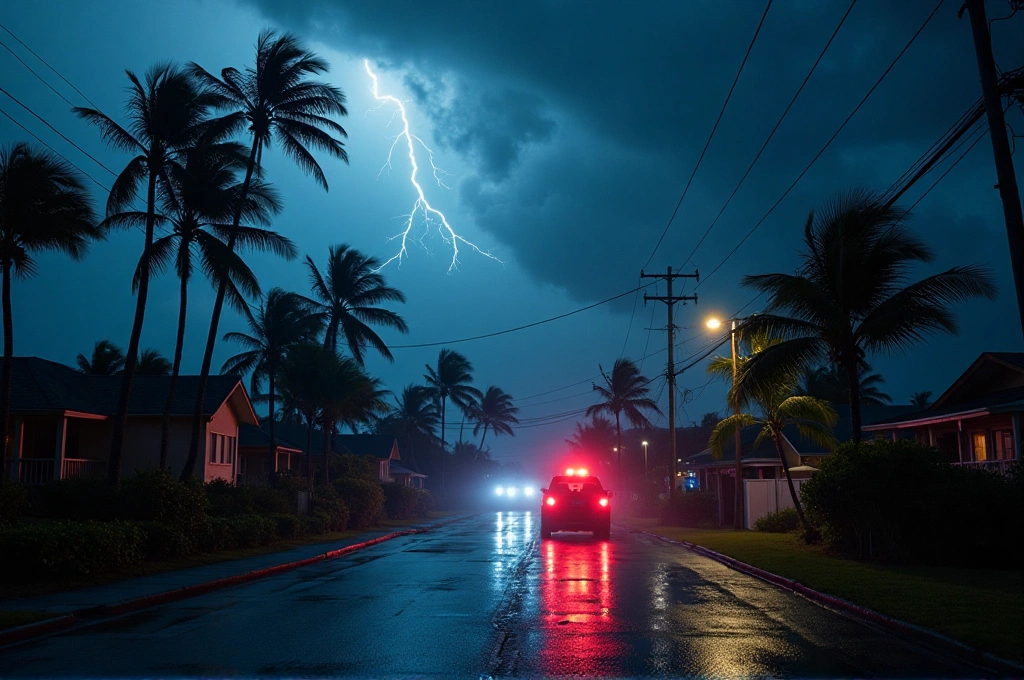
According to the Honolulu Star-Advertiser, Hurricane Lala struck Hawaii on Sunday, causing widespread power outages affecting hundreds of thousands of residents. The storm damaged critical infrastructure—specifically transmission lines—and infiltrated the electrical grid with water damage, degrading or disabling key distribution assets.
This event underscores a persistent vulnerability in island grids: geographic isolation limits rapid repair capacity and spare parts availability. Hawaii's power system depends on a concentrated network of transmission corridors; damage to multiple lines simultaneously can cascade into system-wide blackouts. The fact that mainland utility worker assistance was necessary signals that local resources were either insufficient or fully committed.
For preparedness analysis, this matters because it demonstrates that even developed, well-resourced island economies face multi-day to multi-week recovery timelines after major weather events. Hospitals, water treatment, communications, and supply chains all depend on grid stability. Without it, secondary cascades accelerate: fuel pumps fail, refrigeration collapses, water pressure drops, and communication networks degrade as backup power depletes.
Hawaii's experience here may repeat in other geographically constrained grids—island nations, remote regions, or areas with single points of failure in transmission architecture. The vulnerability isn't unique to Hawaii; it's systemic to grids with limited redundancy.
What to watch: Recovery timeline and whether widespread outages trigger secondary infrastructure failures (water system pressure loss, fuel distribution disruption). The speed of mainland worker deployment and parts logistics will indicate response capacity limits and may preview how utilities handle similar events elsewhere.
