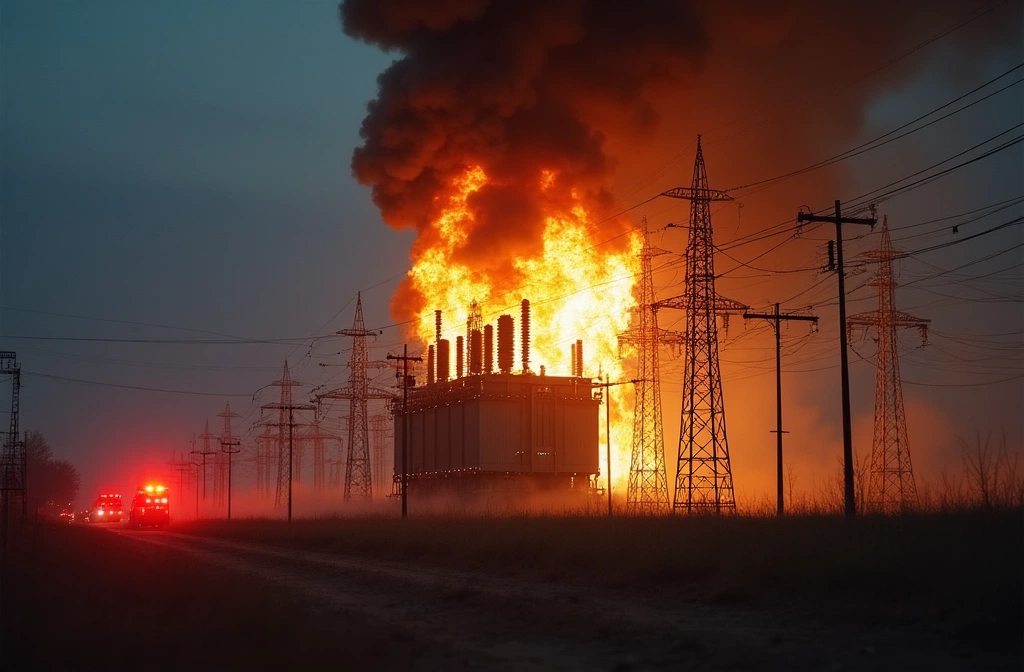
An explosion at the Blue Hills Power Station transformer led to a complete island-wide outage, according to reporting by The Tribune. The fire was contained, and BPL—the local power utility—initiated restoration efforts in stages to maintain grid stability and safety. Initial reporting indicated no estimated timeline for full service restoration, though crews had begun work by early morning.
This event matters because island and peninsula grids operate with inherent constraints: limited redundancy, geographic isolation, and concentrated generation points mean a single major component failure cascades across the entire system with no alternative routing. A transformer at a primary station isn't easily bypassed. The staged restoration approach suggests grid operators were managing capacity carefully—bringing communities online sequentially rather than attempting full simultaneous restoration, which could risk secondary failures.
The lack of an initial timeline for restoration is a practical signal worth monitoring. Extended outages stress supply chains, water treatment, fuel distribution, medical facilities, and communications infrastructure in sequence. Hospitals typically operate on backup generators for 24–72 hours; fuel resupply becomes critical after that window.
For preparedness-minded readers, this highlights why localized infrastructure resilience matters more than often assumed. Island and isolated grid communities face compounded recovery timelines compared to interconnected mainland systems. The staged restoration protocol—while prudent—also signals that full grid recovery may require hours, not minutes. Readers in similar geographic or infrastructure positions should assess their own backup capacity (fuel, water, refrigeration, communications) against realistic multi-hour outage windows, not theoretical brief interruptions. This was a contained equipment failure with known cause. Monitor whether restoration timelines slip beyond initial estimates—that shift would indicate either damage complexity or parts availability constraints, both of which extend real-world recovery.
