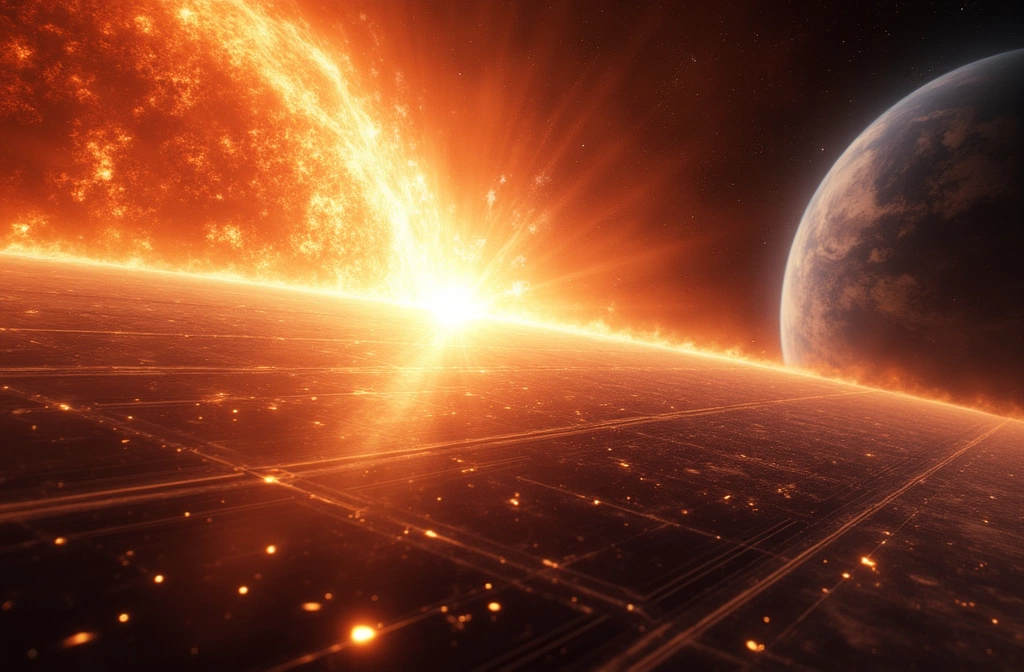
On July 23, 2012, a coronal mass ejection of Carrington-class intensity tore from the Sun and made direct contact with NASA's STEREO-A spacecraft, according to reporting from Space Daily. Earth had been positioned in that same location approximately one week earlier. The timing of this event—a solar storm of sufficient magnitude to trigger continent-wide power grid failures, communications blackouts, and infrastructure cascade damage—represents a statistical near-miss of exceptional significance.
The data captured by STEREO-A before impact constitutes the only direct measurement of an extreme solar event ever recorded by human instruments. This dataset is now the baseline reference for understanding what a Carrington-class storm's actual electromagnetic and particle flux characteristics are, rather than estimates derived from historical aurora records and indirect proxy data.
For preparedness practitioners, this event underscores two operational realities: First, Carrington-class events are not historical anomalies—they remain an active threat in the current solar cycle. Second, our early warning capability depends on satellites like STEREO-A remaining operational. Loss of solar observation infrastructure during a period of heightened space weather risk would eliminate our ability to detect and warn of incoming coronal mass ejections.
The 2012 near-miss also illustrates the role of orbital mechanics in infrastructure vulnerability. A one-week timing difference separated catastrophic grid failure from continued normal operations. Earth's position relative to active solar regions changes continuously, and the statistical probability of a direct Carrington-class strike hitting Earth remains non-zero across any decade.
Infrastructure operators and grid managers should verify that their continuity protocols account for multi-day power loss scenarios. Communications equipment rated for electromagnetic resilience should be tested and inventoried. For individual preparedness, the baseline assumption remains: a Carrington-class event could produce regional or continental power outages lasting weeks to months.
