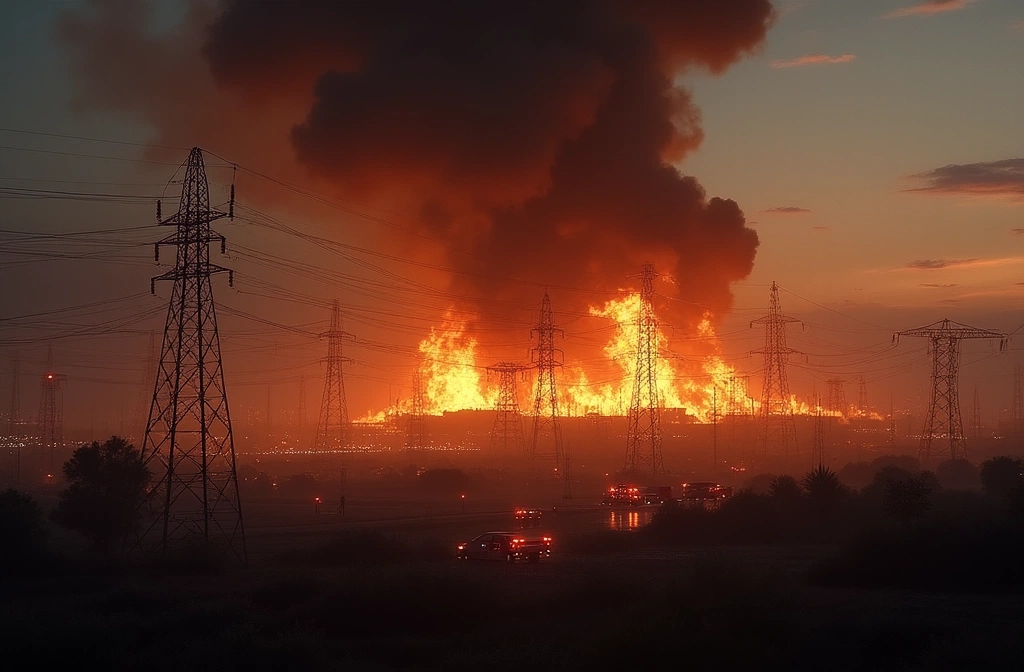
According to Tuko.co.ke, a fire at Kenya Power's Musaga Substation in Kakamega has resulted in a blackout affecting Kakamega, Bungoma, Busia, Siaya, and parts of Vihiga county. The incident represents a localized but significant infrastructure disruption in East Africa's power grid.
Why this matters: Substation fires are among the most disruptive grid failure modes because they take critical switching and distribution infrastructure offline simultaneously. Unlike transmission line failures, which can sometimes be rerouted around, substation losses eliminate an entire node in the network. The fact that this single failure cascaded across five counties suggests either significant population density served by this single point or limited redundancy in that region's grid architecture.
Key preparedness considerations:
Grid fragility signal: This event underscores a pattern visible across developing and emerging power grids globally—concentration of critical infrastructure with limited geographic redundancy. When one substation failure blacks out multiple counties, it reveals vulnerability to single-point-of-failure scenarios.
Restoration timeline unknown: The source does not specify whether power has been restored or what timeline Kenya Power is operating under. Extended outages in this geography could stress water systems (pumping), communications towers (battery backup depletion), and healthcare facilities.
What to watch: Monitor whether Kenya Power issues statements on cause (equipment failure, maintenance issue, external damage) and projected restoration. Cause classification matters—fires at substations can indicate aging infrastructure, inadequate maintenance protocols, or environmental stress (heat, vegetation). Any of those points to recurrence risk.
This is a contained regional event with no indication of cascading national grid failure. However, it demonstrates a real-world infrastructure vulnerability that preparedness-minded individuals should factor into local risk assessment, particularly in regions dependent on centralized substation architecture.
