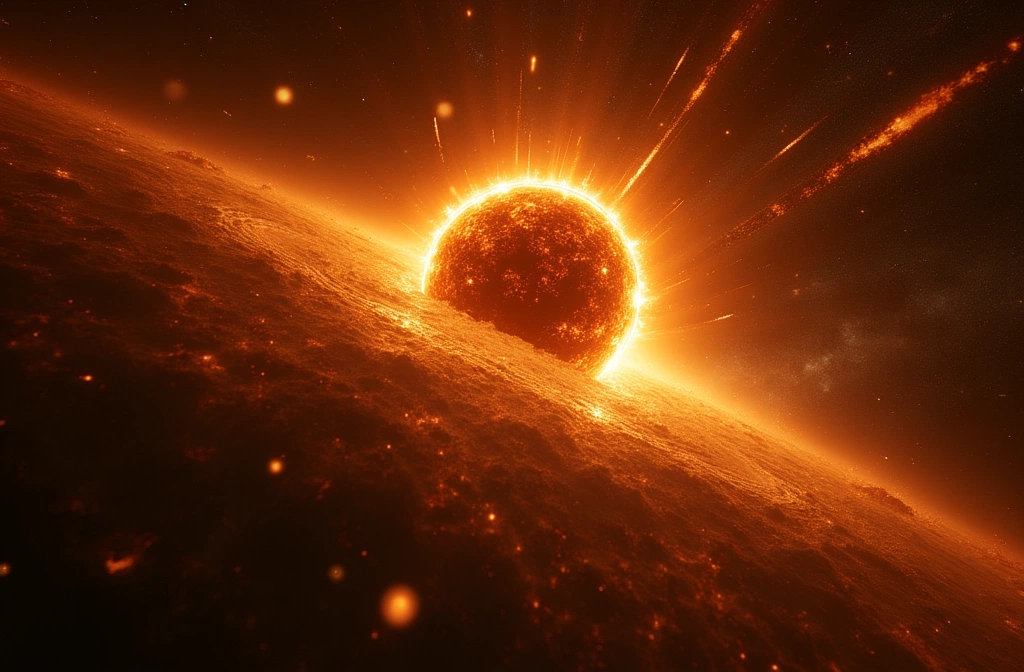
According to EarthSky reporting, a large coronal hole on the Sun is turning toward Earth. Coronal holes are regions of open magnetic field lines where solar wind escapes more freely into space, producing faster, denser streams of charged particles.
When a coronal hole rotates into an Earth-facing geometry, the solar wind originating from that region travels down the Sun-Earth line. This can increase geomagnetic activity, particularly during the declining phase of the solar cycle when such holes are more prevalent. The severity is currently rated low, meaning infrastructure stress is not expected to be acute.
Why this matters: Grid operators, power utilities, and telecom networks monitor coronal holes as part of space weather forecasting. A significant increase in solar wind density can compress Earth's magnetosphere, inducing currents in long conductors (transformers, transmission lines, pipelines). While individual coronal holes rarely trigger major events, they serve as a measurable stress on power systems and can degrade high-frequency radio propagation used in aviation and maritime navigation.
The current low severity rating suggests this particular hole is not expected to produce extreme geomagnetic conditions. However, it represents the type of recurring solar activity that, in aggregate, stresses infrastructure resilience year-round.
What to watch: Monitor NOAA Space Weather Prediction Center updates for geomagnetic K-index forecasts over the next 48–72 hours. If this coronal hole produces unexpectedly strong solar wind, official severity could be upgraded. For preparedness purposes, use this as a reminder to verify that critical systems (backup power, communication redundancy, water supply) have recent test records. Coronal holes are not anomalies—they are seasonal features of solar activity that preparedness-minded operators should factor into baseline monitoring cycles, not crisis response.
