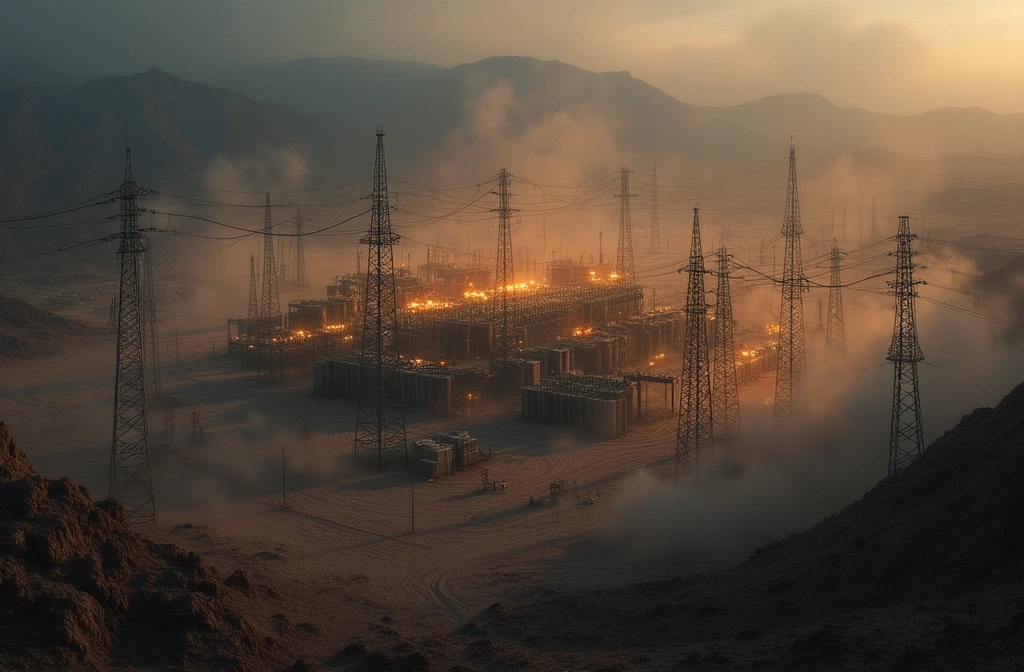
According to reporting from The Peninsula Qatar, an attack on the Zawiya substation operated by Libya's General Electricity Company has resulted in a power outage. The incident was first identified on August 12, 2026.
The Zawiya substation serves as a critical node in Libya's electrical distribution network. Single-point failures at major substations can propagate rapidly through interconnected grids, affecting industrial, municipal, and civilian infrastructure downstream. Libya's electricity sector has faced repeated operational challenges in recent years, and the loss of a major substation—regardless of duration—demonstrates how dependent modern economies are on a small number of hardened infrastructure points.
What makes this event significant for preparedness awareness: substations like Zawiya are high-value targets because their operational impact is immediate and widespread. Unlike distributed generation systems, centralized grid architecture concentrates risk. A substation outage can affect hospitals, water treatment, fuel distribution, telecommunications, and supply chains within hours.
The attack vector remains unclear from available reporting, and attribution has not been established by named sources. The duration of the outage and scope of affected regions are not specified in current signals.
For infrastructure analysts, this event is a data point in a longer pattern: critical energy nodes in regions with active conflict or instability face recurring pressure. Libya's grid has experienced multiple disruptions over the past decade, each revealing similar structural vulnerabilities.
The preparedness implication is straightforward: regional power outages tied to infrastructure attack—whether in Libya, the Levant, or elsewhere—serve as operational tests of how quickly cascading failures propagate and how dependent civilian systems remain on single-node recovery. If Zawiya's restoration timeline extends beyond hours, secondary failures in dependent systems (water, fuel, communications) may emerge within 24-72 hours.
