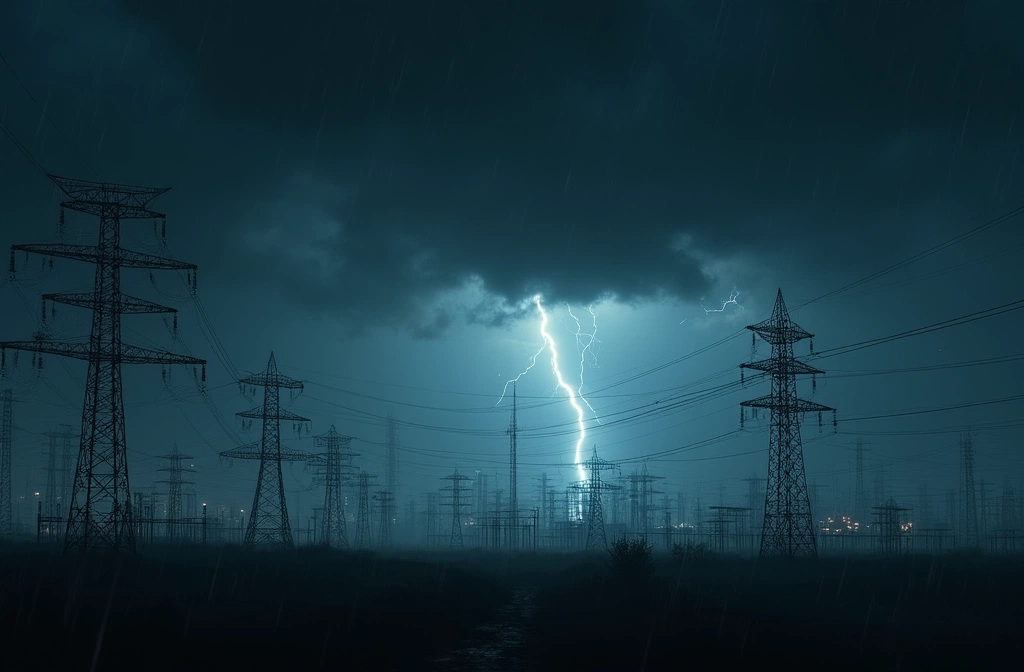
According to Hindustan Times, a late-night storm disabled Ludhiana's power network, leaving the city without electricity for approximately 11 hours. Engineers responded by diverting electrical load to minimize disruption while repair work continued. The transformer was restored around 1 pm, restoring normal service.
This event matters because it demonstrates a straightforward but significant vulnerability: major transformers remain exposed to weather events in regions where electrical demand is concentrated. Ludhiana, a city of roughly 1.6 million in Punjab, relies on centralized generation and distribution infrastructure that can be disabled by a single equipment failure triggered by atmospheric conditions.
The response protocol—load diversion to reduce strain while repairs proceed—is standard grid management. But it also reveals an operational constraint: when primary equipment fails, the grid's capacity to redistribute demand is finite. If secondary systems are stressed or unavailable, outages extend and deepen.
What matters for preparedness: this is not a rare event. Transformer failures triggered by storms occur routinely across densely populated grids in Asia, North America, and Europe. Ludhiana's 11-hour window is moderate; similar outages have lasted 24+ hours in comparable urban settings. The key variable is repair access and spare equipment availability—factors that degrade during larger, multi-point weather events.
The broader signal: single-point failures in legacy grid infrastructure remain the norm rather than exception. Urban areas with high population density and concentrated industrial load face cascading risk if repair capacity is limited or if multiple transformers fail simultaneously. This is especially relevant in regions where spare transformer stock is limited or geographically distant.
Watch for patterns: if Ludhiana reports additional transformer stress or if regional utilities announce equipment procurement delays, that suggests repair capacity constraints are active. Preparedness-minded individuals in high-density urban centers should audit their backup power independence—battery capacity, fuel storage, medical device contingencies—on a local, household level.
