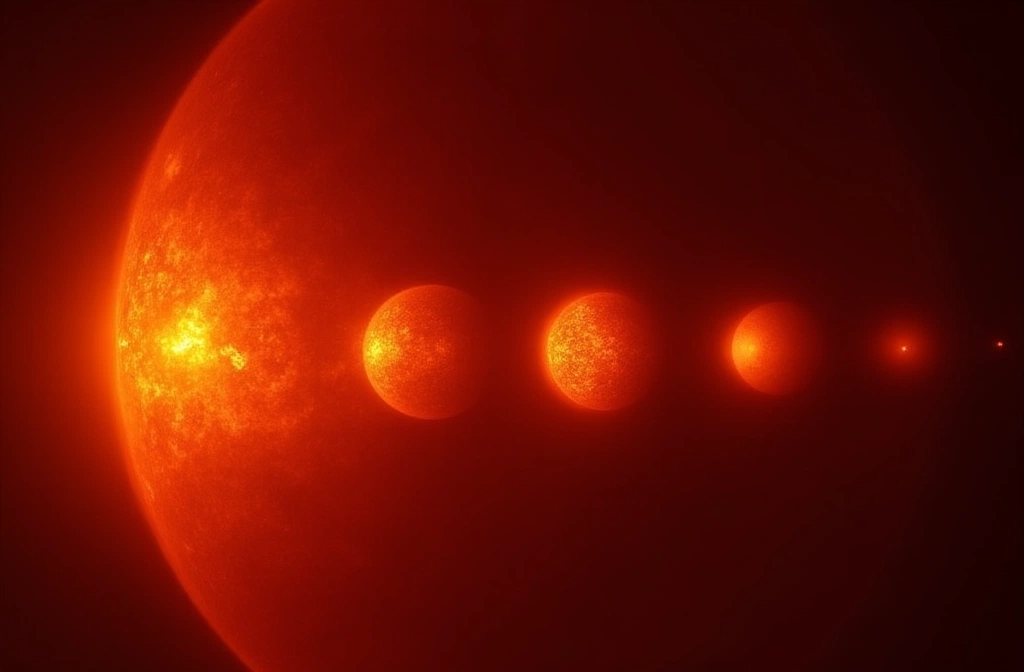
On June 17, 2026, sunspot region AR4464 fired multiple jets before rotating to the sun's far side, including at least one M-class flare during the period. According to EarthSky's reporting via NOAA data, no geomagnetic storm conditions occurred on Earth as a result. The Kp index—the standard metric for measuring geomagnetic disturbance—remained just above level 1, indicating minimal ionospheric disruption.
Why this matters: M-class flares are moderate-strength solar events. On the five-tier solar flare scale (A, B, C, M, X), M-flares sit in the middle. They can produce measurable geomagnetic effects depending on coronal mass ejection (CME) speed, direction, and Earth's magnetic orientation at impact. This event did not. AR4464's departure to the sun's far side also reduces the immediate probability of additional Earth-directed activity from this specific region.
For infrastructure and grid operators, the signal is straightforward: no elevated risk from this event. However, AR4464 demonstrated sustained activity—multiple jets over a 24-hour window—before rotating away. That pattern is worth tracking, as solar regions can produce secondary events after far-side rotation if they re-emerge toward Earth in future rotations (typically 27 days later).
For preparedness-minded readers, this is a routine reminder of solar baseline behavior: active sun, moderate flares, no impact. It's the operational normal we should expect during solar cycle 25's rising phase. The grid, satellites, and communications systems handled AR4464 without stress.
What to watch next: Monitor NOAA's Space Weather Prediction Center for new active regions rotating into Earth-view. Watch the Kp index for sustained readings above level 5 (G1 geomagnetic storm threshold). AR4464 itself may re-emerge in late July 2026 if solar rotation patterns hold.
