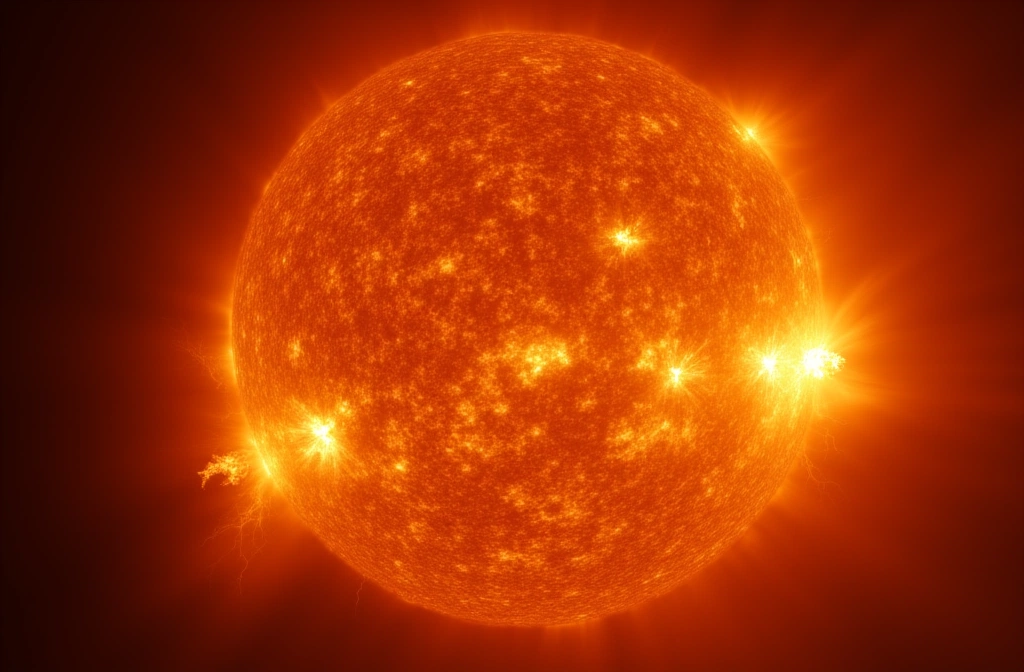
According to The Watchers, solar radiation storm conditions remained below NOAA scale thresholds during the 24-hour period through April 28, but the Space Weather Prediction Center (SWPC) is forecasting a 10% chance of S1 or greater solar radiation storm conditions on each day from April 27 through April 29. The threat originates from active solar regions 4420 and 4425.
Here's what matters: S1-level solar radiation storms are the lowest category on NOAA's scale, but they're not benign. Elevated greater-than-10 MeV proton flux at this level can degrade HF radio propagation, increase single-event upsets in satellite systems, and impact polar aviation operations. The fact that SWPC is maintaining a 10% probability window across three consecutive days suggests these regions remain magnetically unstable and capable of rapid evolution.
The key distinction: proton flux is forecast to remain at background levels, which means widespread grid or communications disruption is not the current scenario. This is a regional risk to specific systems—not a widespread infrastructure event. However, it warrants monitoring because solar active regions can produce multiple flares in succession, and each successive event could potentially escalate in magnitude.
What to watch: The probability window expires April 29. If SWPC extends the forecast beyond that date, or if either region produces an M-class flare before then, pay immediate attention to official NOAA/SWPC updates. The agency typically provides 12-24 hour lead time before S1 conditions arrive.
For preparedness purposes, this is a good moment to verify that critical infrastructure operators, emergency managers, and communications teams have current solar weather alerts enabled. If you rely on HF radio for backup communications—emergency services, amateur radio, maritime—run a system check now rather than during an active event.
