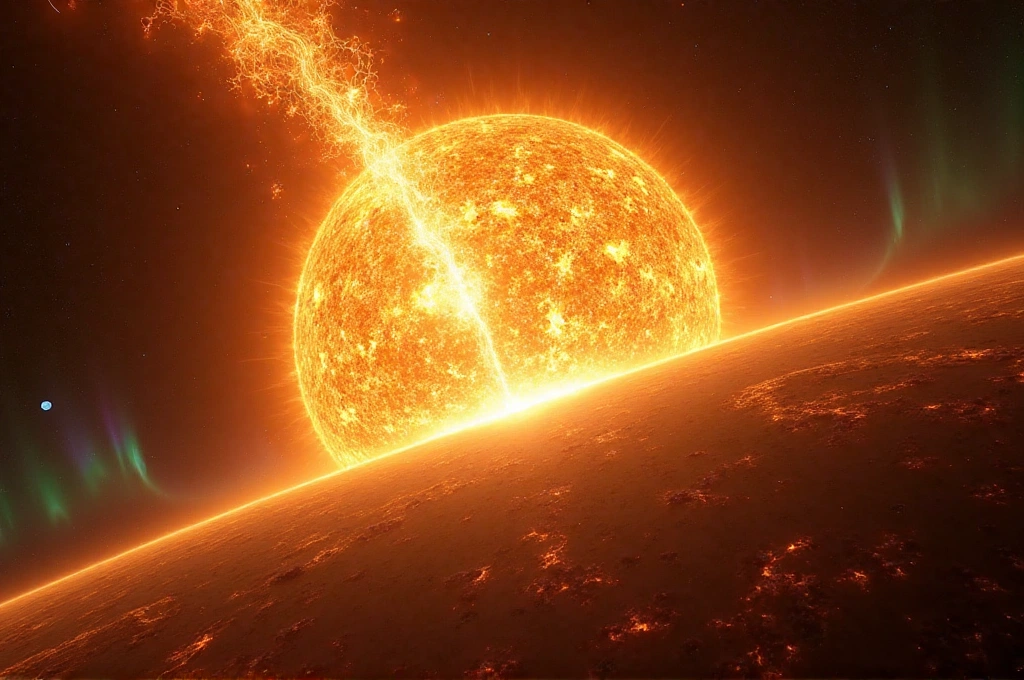
According to Fox Weather, the sun triggered a powerful M6.9 solar flare that spawned a coronal mass ejection (CME) forecast to reach Earth later this week. The event may spark a minor geomagnetic storm, which could produce visible aurora displays at northern latitudes by Friday.
Here's what matters: While the current forecast severity is low, this event underscores a critical gap in infrastructure resilience. Most grid operators, communications providers, and supply chain managers treat space weather as a secondary concern—until it isn't.
Minor geomagnetic storms typically cause minimal disruption. However, they serve as a diagnostic tool. They tell us:
Detection and response timelines work. Space weather prediction has improved. The fact we're seeing advance warning suggests monitoring infrastructure is functioning.
Vulnerability remains real. Even minor events expose latency in utility coordination and backup activation protocols. If a G1-level storm reveals communication gaps, a G4 or G5 event—which solar scientists confirm occur on irregular but predictable cycles—will exploit those same gaps at scale.
Aurora visibility ≠ grid safety. Public focus on aurora forecasts often drowns out the infrastructure story. Beautiful northern lights can coexist with transformer saturation, GPS degradation, and HF radio blackouts. Preparedness requires separating spectacle from signal.
The broader context: We're in a solar cycle peak. Stronger flares will occur. The question isn't whether, but when—and whether critical systems will have closed the response windows that events like this one expose.
What to watch: Monitor NOAA's Space Weather Prediction Center for updated geomagnetic storm forecasts over the next 72 hours. If the CME impact proves stronger than currently forecast, it's a signal that model uncertainty remains high—a condition that should inform your own contingency assumptions.
