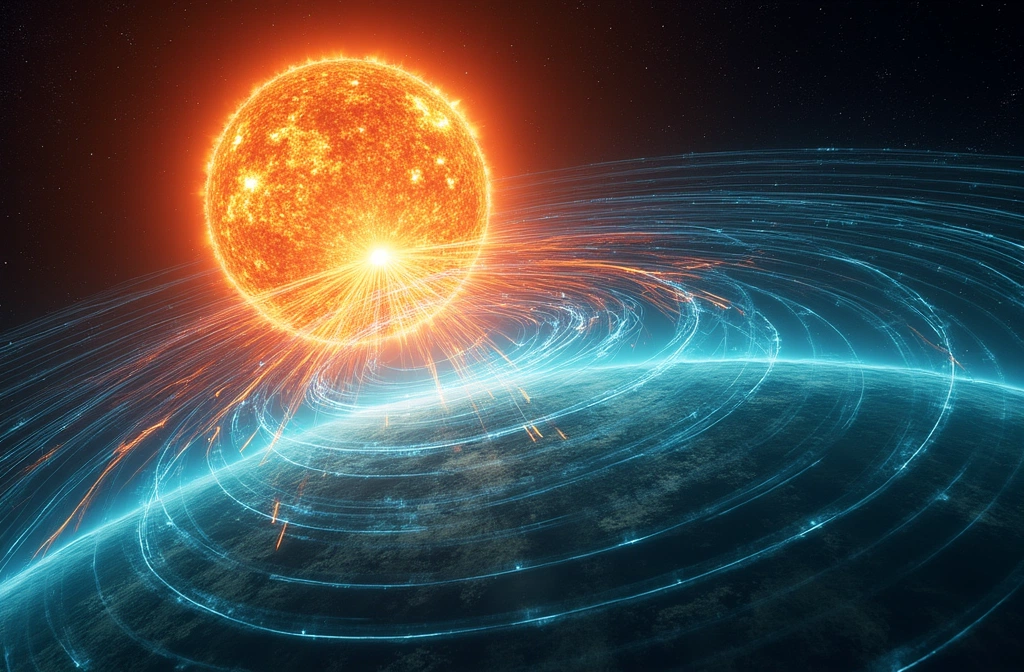
According to Universe Today, researchers are questioning longstanding assumptions about Earth's magnetosphere as a reliable shield against severe solar superstorms. The reporting emphasizes a fundamental issue in scientific work: hypotheses developed and tested over time may not account for all variables or edge cases when real-world conditions diverge from controlled analysis.
This matters because critical infrastructure — power grids, communications networks, and satellite systems — has been designed with magnetosphere protection factored into risk models. If that protection proves less comprehensive than assumed during extreme events, the vulnerability window for cascading failures expands significantly.
The source does not provide specific new findings, timeline predictions, or quantified risk increases. Rather, it flags a methodological reality: the gap between what we believe we know and what empirical data confirms under extreme conditions is where preparedness blind spots emerge.
For infrastructure planning, this suggests existing solar storm contingency models may require revision. The practical implication is not that catastrophe is imminent, but that assumptions embedded in grid hardening, backup system design, and emergency response protocols may be based on incomplete threat characterization.
Historically, the 1859 Carrington Event occurred before we had magnetosphere science. The 1989 Quebec blackout and 2003 power cascades across the northeastern US happened within our current understanding — yet neither fully tested the extreme end of the solar storm spectrum. If magnetosphere effectiveness diminishes under superstorm conditions we haven't directly measured, we may lack real-world data on how infrastructure actually fails when protection assumptions break down. This is a critical gap between theoretical models and stress-tested reality.
