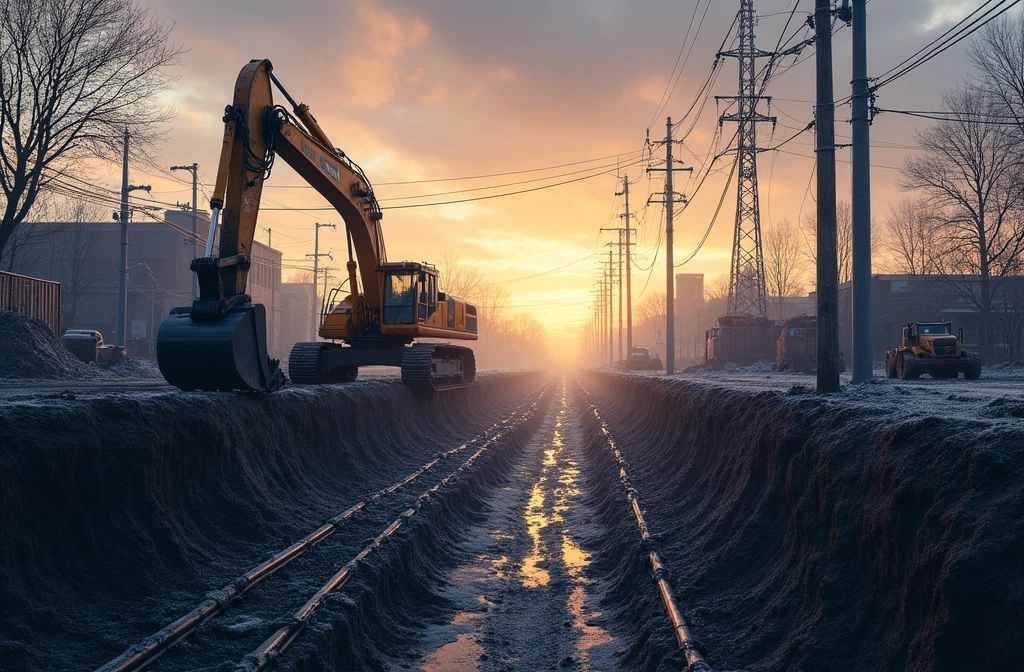
In March 2025, a severe ice storm struck northern Michigan, downing trees and snapping utility poles across the region. According to Inside Nova, thousands of people lost power, with some remaining without electricity for weeks. The incident has prompted utilities in the area to seriously consider undergrounding power lines—moving infrastructure from above-ground exposure to buried systems.
This matters because above-ground lines remain a primary failure point in severe weather events. Tree falls, ice accumulation, and high winds consistently drive outage cascades. Inside Nova reports that weather-related events cause significant annual outages, many directly attributed to trees falling on above-ground infrastructure.
The core problem is cost versus risk. Burying power lines is described as "simple yet expensive"—meaning the technical solution exists, but capital and logistical barriers have prevented widespread deployment. Most U.S. grids remain largely above-ground, leaving vast regions vulnerable to repeat events like the Michigan storm.
What this tells you: utilities are beginning to move from response-mode (restoring power after failure) to mitigation-mode (preventing failure). That's a systemic shift. However, widespread undergrounding takes years and billions in capital. Until that happens, the grid remains structurally exposed to the same failure modes that caused the Michigan blackout.
The signal to watch is whether this Michigan case catalyzes regulatory pressure or funding mechanisms to accelerate burial projects regionally. If utilities move incrementally—burying only critical nodes or dense urban areas—preparedness-minded readers should expect continued vulnerability in rural and semi-rural zones. Grid resilience is only as strong as its weakest segments.
