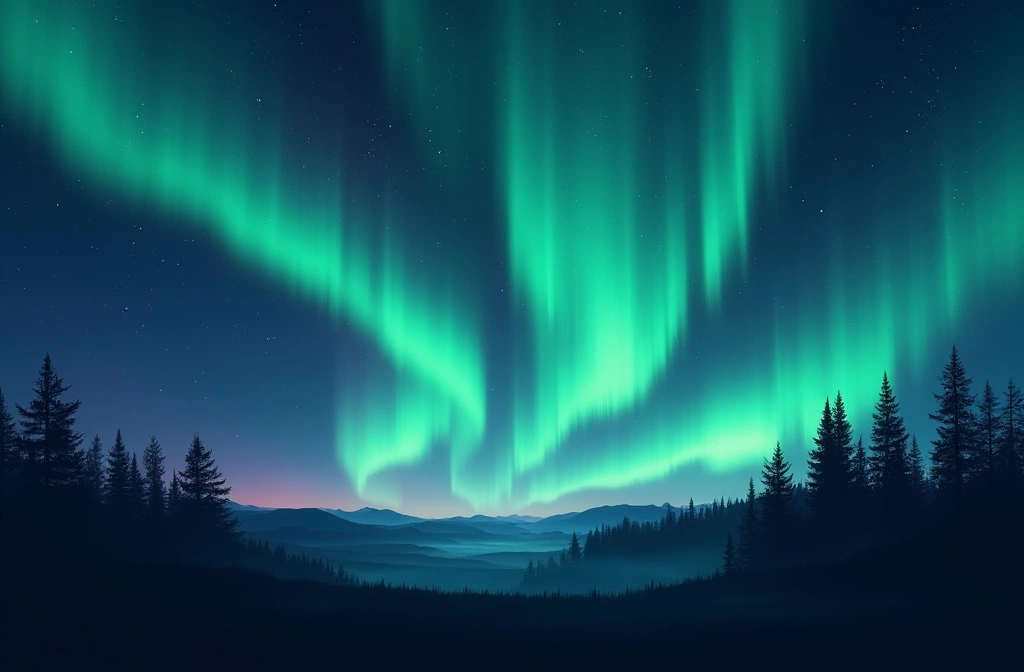
A moderate geomagnetic storm could make the northern lights visible across nearly 20 U.S. states Friday night and into early Saturday morning, according to reporting from FOX 32 Chicago citing NOAA's Space Weather Prediction Center.
This is not a threat event. It is a visibility event — and it matters for a different reason.
Geomagnetic storms occur when solar wind interacts with Earth's magnetosphere. Moderate-level storms (typically G2-G3 on NOAA's scale) produce auroral displays visible at lower latitudes than usual. That's the headline. But the secondary signal is more important for preparedness professionals: geomagnetic disturbances, even moderate ones, stress power grids, transformers, and long-distance transmission lines.
NOAA's Space Weather Prediction Center provides advance notice of these events. That agency has been the authoritative source for space weather warnings in the U.S. for decades. The visibility window cited here — Friday night through early Saturday — represents the predicted peak of activity.
For most citizens, tonight's aurora is entertainment. For grid operators, it's a live stress test. Moderate storms have historically caused localized voltage fluctuations and transformer heating. They don't typically trigger cascading blackouts, but they do reveal which infrastructure is vulnerable to longer-duration or higher-intensity events.
Why this matters now: If you've been tracking solar activity as an indicator of grid risk, moderate storms like this one provide empirical data. They show how regional utilities respond in real time, whether monitoring systems function as designed, and whether backup systems activate appropriately. Pay attention to whether any power disruptions occur in the affected 20-state zone — not as panic, but as baseline intelligence.
The second takeaway is simpler: NOAA Space Weather alerts work. They provide advance notice. If you're not subscribed to NOAA's space weather email alerts, now is the time to do so. This event is a reminder that the system to detect solar threats is functional and public.
Watch the aurora if conditions permit. Use the event as a live reminder that your grid and communications infrastructure operate within a dynamic electromagnetic environment — and that advance warning systems exist.