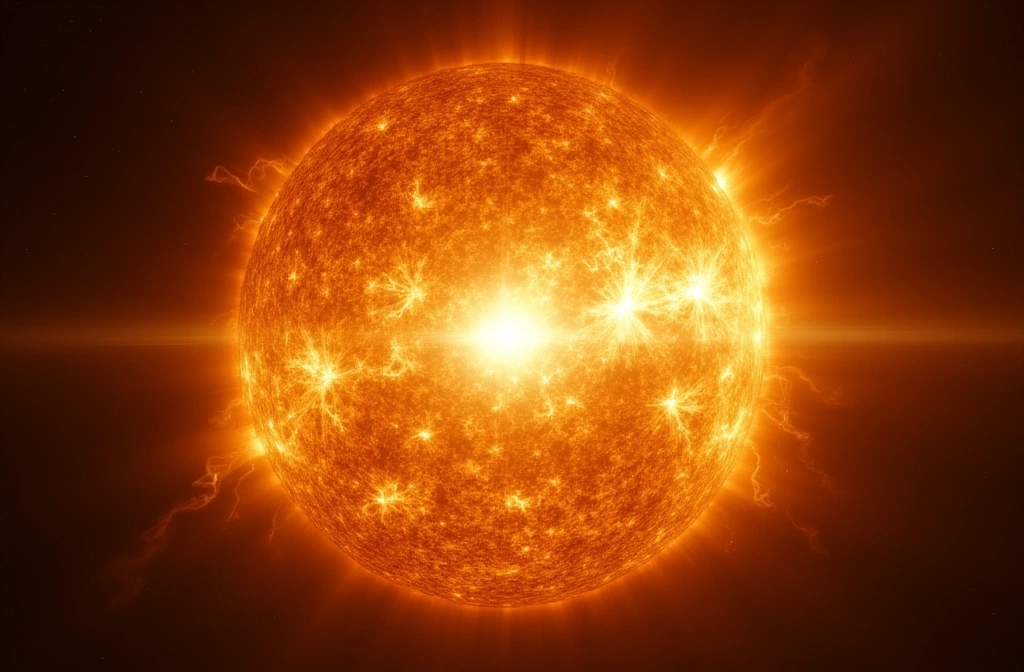
According to Mashable, NASA has detected the strongest solar flare in six years. This marks a notable uptick in solar activity as we move deeper into the current solar cycle.
Solar flares are sudden, intense bursts of radiation across the electromagnetic spectrum. The significance of this event depends on two factors: the flare's classification and whether it produced a coronal mass ejection (CME)—a separate phenomenon where the Sun ejects charged particles into space. A major flare does not automatically trigger a major CME, and CME arrival timing and orientation determine real-world impact on Earth's magnetosphere and infrastructure.
Why this matters: Grid operators, satellite operators, and communications providers monitor solar events because severe geomagnetic storms can disrupt power distribution, degrade GPS precision, interrupt high-frequency radio communications, and damage transformer hardware. A direct, well-aimed CME hit during peak solar cycle activity has caused measurable outages before—though the 2024 May geomagnetic storm, for example, produced minor to moderate effects despite elevated solar activity.
The six-year gap since the last flare of this magnitude is consistent with solar cycle patterns. We are currently in Solar Cycle 25 (which began in 2019), and activity is expected to peak around 2024–2025. Elevated flare frequency in this phase is baseline solar behavior, not anomalous.
What to watch: Monitor NOAA's Space Weather Prediction Center (SWPC) for real-time geomagnetic storm watches and CME arrival forecasts. A G3 or higher geomagnetic storm watch is a signal to review backup power systems, GPS-dependent operations, and long-distance communications redundancy. Most critical infrastructure has hardening measures in place, but localized effects on older grid segments and satellite operations remain plausible during strong events.
This flare is data, not a drill—but it is also not a trigger event. Track the pattern, not the headline.
