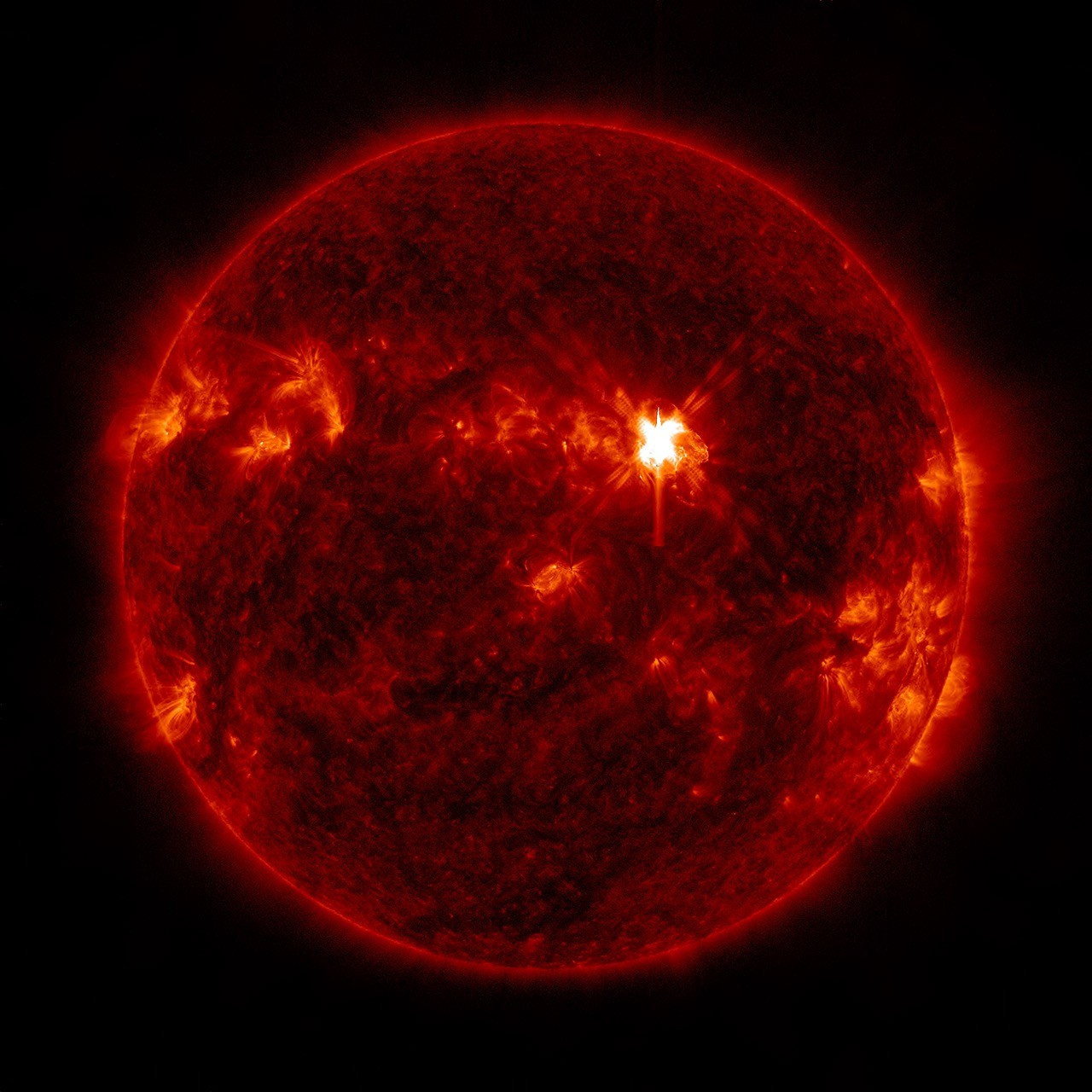
On June 3, 2026, the Sun emitted a strong solar flare that peaked at 7:28 a.m. ET, according to NASA's Solar Dynamics Observatory, which maintains continuous monitoring of solar activity. NASA captured imagery of the event via their dedicated solar monitoring infrastructure.
Why this matters: Strong solar flares are classified events on the X-ray spectrum. While the flare itself poses no direct threat to ground infrastructure, the real risk lies in coronal mass ejections (CMEs)—bursts of plasma and magnetic field that may or may not accompany flare activity. If a CME was ejected toward Earth, it could trigger geomagnetic storms affecting power grids, satellite communications, GPS systems, and high-frequency radio networks depending on intensity and arrival timing.
Current gaps in available intelligence: The NASA source provided does not specify the flare's classification level (M-class, X-class, etc.), does not confirm whether a CME was associated with this flare, and does not indicate if NOAA's Space Weather Prediction Center has issued geomagnetic storm watches or warnings. These details are essential for assessing actual infrastructure risk.
What to watch next: Monitor NOAA Space Weather Prediction Center alerts for:
- Official geomagnetic storm watch or warning issuance
- CME arrival time estimates (typically 18-96 hours post-flare)
- Real-time Kp index readings (geomagnetic activity scale)
- Power grid operator advisories from regional transmission entities
Preparedness context: Solar activity is cyclical and predictable in broad terms, but individual flare and CME behavior is not. Strong flares occur regularly during solar maximum phases. The distinction between a notable event and an infrastructure threat depends entirely on CME presence and Earth-directed trajectory—data not yet confirmed in available reporting.
Stay informed through official NOAA and NASA channels. Avoid speculation about grid collapse absent storm watch designation.
