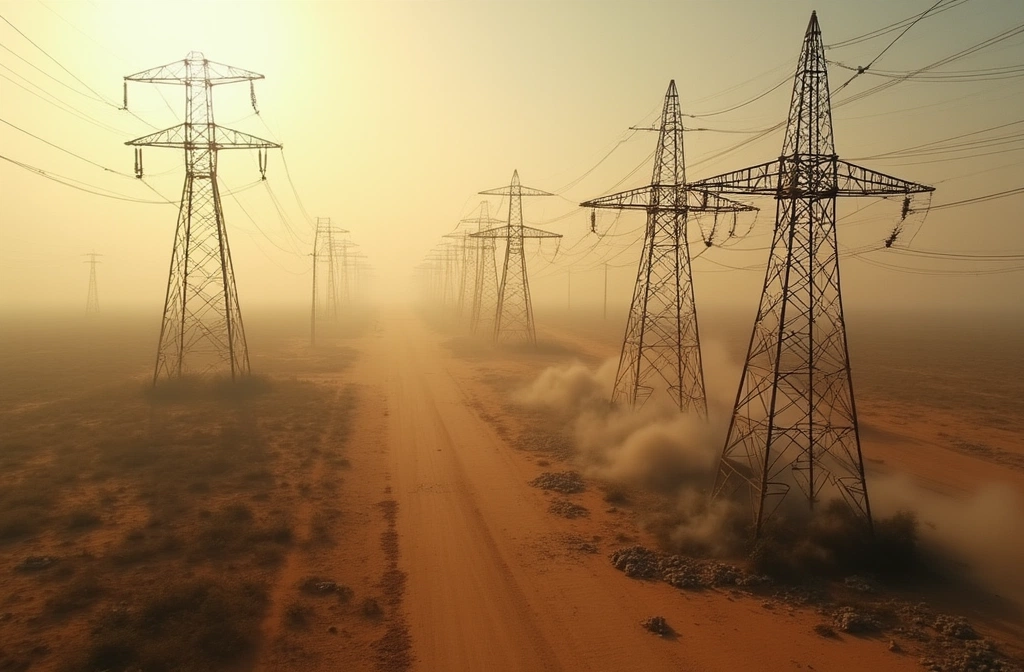
On June 5, 2026, six transmission towers on the Apir–Lafia 330kV transmission line in Nasarawa State, Nigeria were destroyed in what The Sun reports as a vandal attack. This line is classified as critical infrastructure for Nigeria's power network. The destruction has resulted in widespread power outages across parts of the country.
Why this matters: The 330kV transmission level is high-voltage backbone infrastructure — not local distribution. Loss of six towers on a single critical corridor represents significant capacity loss. Nigeria's grid has faced chronic instability; attacks on transmission infrastructure can cascade through interconnected networks, affecting generation, distribution, and load management across multiple regions.
This is not an isolated incident. The Sun's framing ("fresh attack") suggests a pattern of transmission infrastructure vandalism in Nigeria. Repeated targeting of the same corridor or system raises questions about vulnerability and restoration capacity — both physical repair time and spare parts availability.
Key considerations for infrastructure resilience tracking:
First, restoration timelines matter. How long does it take Nigeria's Transmission Company of Nigeria (TCN) to repair or replace six towers? Days or weeks of outage duration will determine whether this is a localized disruption or a cascading failure event.
Second, redundancy gaps. Does the grid have alternate routing for load that normally flows through Apir–Lafia? If not, that load must be shed or rerouted through less efficient paths, increasing strain elsewhere.
Third, pattern recognition. If this represents escalating infrastructure targeting — whether criminal, political, or resource-driven — frequency and coordination matter for grid planners and emergency management.
For readers: Document local grid stress indicators in your region (voltage fluctuations, rolling outages, load-shedding announcements). These precede larger failures. Verify your backup power status — battery charge, fuel supply, alternative generation — and confirm communication plans don't depend on grid power.
