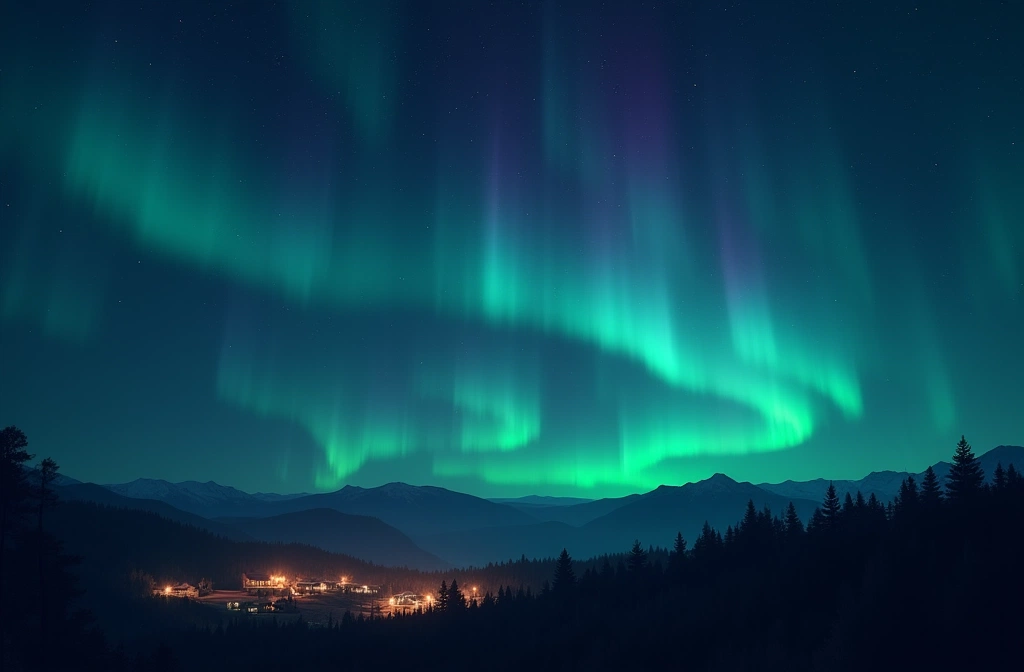
NOAA's Space Weather Prediction Center forecasts minor G1 geomagnetic storm conditions through Monday, May 19, with a slight possibility of G2-level activity, according to multiple reports citing official forecasts. The storms are being triggered by high-speed solar wind originating from a coronal hole on the sun. The Kp index—the standard measure of geomagnetic disturbance on a 0-9 scale—has been forecast at 4 for Saturday night, with conditions potentially persisting through the following days.
According to NOAA's Space Weather Prediction Center, the aurora borealis may be visible from states along the Canadian border, including parts of Washington, Idaho, and Montana. The new moon phase on Saturday could enhance visibility of fainter auroras. Multiple news outlets reporting on NOAA forecasts indicate that the G1-level activity represents a minor geomagnetic storm—well below the G4-G5 threshold that historically triggers widespread power grid and communications disruptions.
Why this matters: While G1 storms typically have minimal infrastructure impact, they serve as a calibration point. This event allows grid operators and communications networks to monitor real-time response data and validate monitoring systems. Minor geomagnetic events can occasionally cascade into stronger activity; NOAA's forecast notes a "slight chance" of G2-level conditions, which would merit closer tracking of power system behavior. For preparedness analysts, geomagnetic storms remain a critical threat vector—the 1859 Carrington Event and the 1989 Quebec blackout both demonstrated how solar activity can disable large-scale electrical systems.
What to watch: Monitor NOAA's Space Weather Prediction Center for any upgrade in the Kp index forecast. G2 or higher classifications warrant immediate attention to critical infrastructure status reports. The next 72 hours will show whether this activity escalates or dissipates as predicted.
