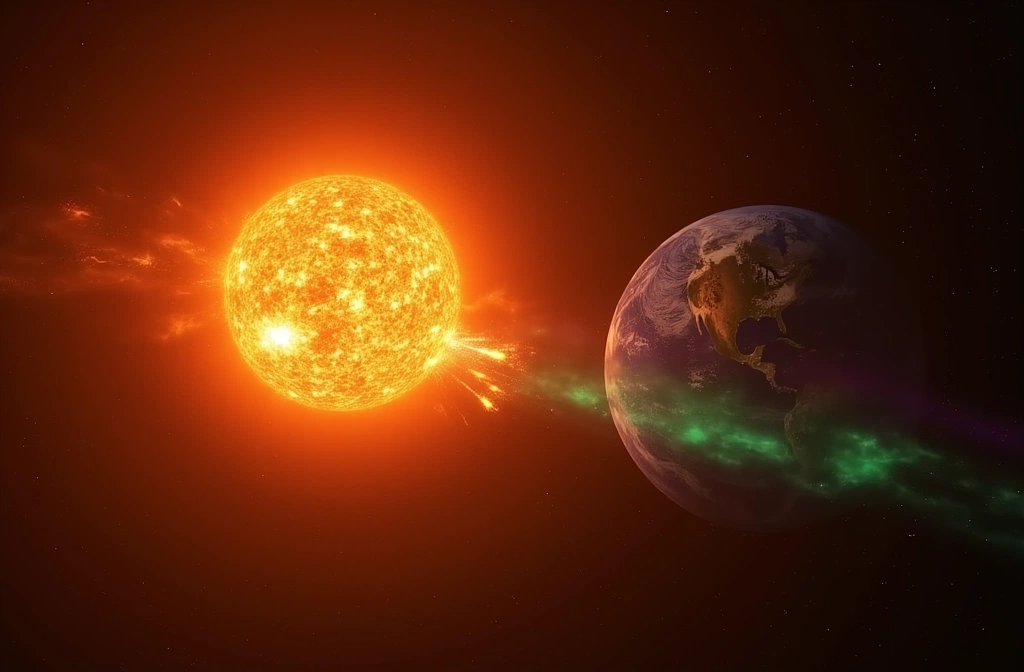
On July 3, 2026, NOAA issued an alert for a G2 geomagnetic storm triggered by an X1.1-class solar flare. The storm was forecast to arrive by July 4, with potential impact windows extending through July 5.
G2-level storms are classified as "moderate" on the NOAA space weather scale (0–5 range). At this level, grid operations may experience voltage irregularities and require real-time adjustments. High-frequency radio propagation can degrade, affecting aviation and maritime communications. GPS accuracy may degrade in certain bands. Satellite operations are generally stable at G2, but monitoring is required.
The X1.1 flare that preceded this warning is significant: X-class flares represent the most energetic category of solar eruptions. While not unprecedented, the timing coincides with an active phase of the solar cycle, and NOAA flagged the potential for storms to reach G2 intensity—confirming that space weather activity remains in an elevated operational environment.
For grid operators and critical infrastructure managers, the operational posture is clear: G2 storms require awareness and readiness, though they do not typically cause widespread blackouts. Ground-based power transformers and control systems should be monitored for voltage anomalies. Communications teams should have backup protocols ready if HF or GPS services degrade temporarily.
Historically, G2 storms occur several times per solar cycle and are well-understood by operators. The May 2024 geomagnetic storms (which reached G4 levels) demonstrated that even stronger events can be managed with proper preparation and real-time response. This G2 event is less severe but valuable as a reminder: space weather is not a theoretical risk—it is an operational reality that requires standing protocols, not improvisation.
The critical metric to track: whether the storm reaches predicted intensity as forecast, and whether any unexpected infrastructure impacts are reported during the July 4–5 window.
