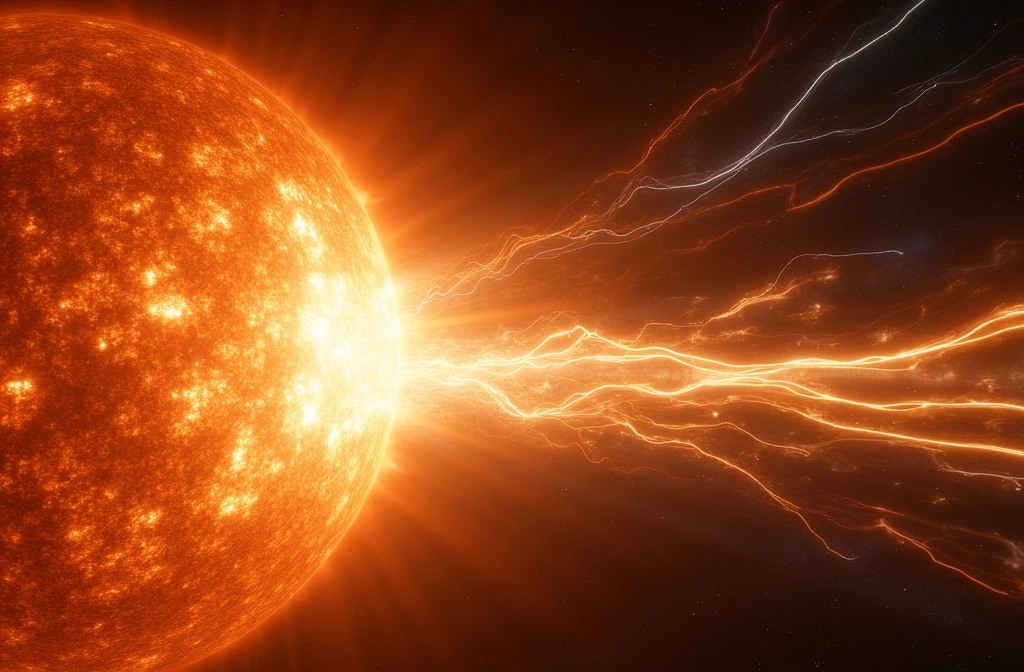
On July 1, 2026, the Sun unleashed a powerful X-class solar flare with an associated coronal mass ejection (CME) directed at Earth. Following initial assessment, NOAA's Space Weather Prediction Center upgraded its forecast to a Moderate (G2) geomagnetic storm watch for July 3, indicating that at least a significant portion of the CME is expected to impact Earth's magnetosphere.
G2-level geomagnetic storms—on a scale where G5 is most severe—can degrade high-frequency radio communications, affect satellite operations, and stress power grid systems, particularly in high-latitude regions. While not in the extreme category, a G2 event warrants attention from grid operators, satellite operators, and anyone relying on GPS, HF radio, or VHF communications during the watch window.
The event has triggered visible aurora alerts, with northern lights expected to be observable at lower latitudes than typical, including during the July 4 weekend. This is a secondary indicator of magnetospheric compression but does not itself cause grid or infrastructure failure.
Key question for infrastructure stakeholders: Power utilities and telecom operators should verify that monitoring and response protocols are active through July 3. This is a proven, trackable threat with a narrow forecast window—not a surprise scenario.
Historically, G2 storms occur several times per solar cycle and rarely cause widespread outages in modern, well-maintained grids. The 1859 Carrington Event (estimated G5) caused transformer failures and telegraph system collapse. The 1989 Quebec blackout during a G4 storm knocked out power to 6 million people. Neither G2 nor G3 storms have caused grid-wide cascade failures in North America since modern SCADA systems and protective relaying became standard, though localized effects remain possible. This event sits well below those historical thresholds, suggesting elevated caution rather than emergency posture—but confirms that solar storm impacts remain a real infrastructure variable.
