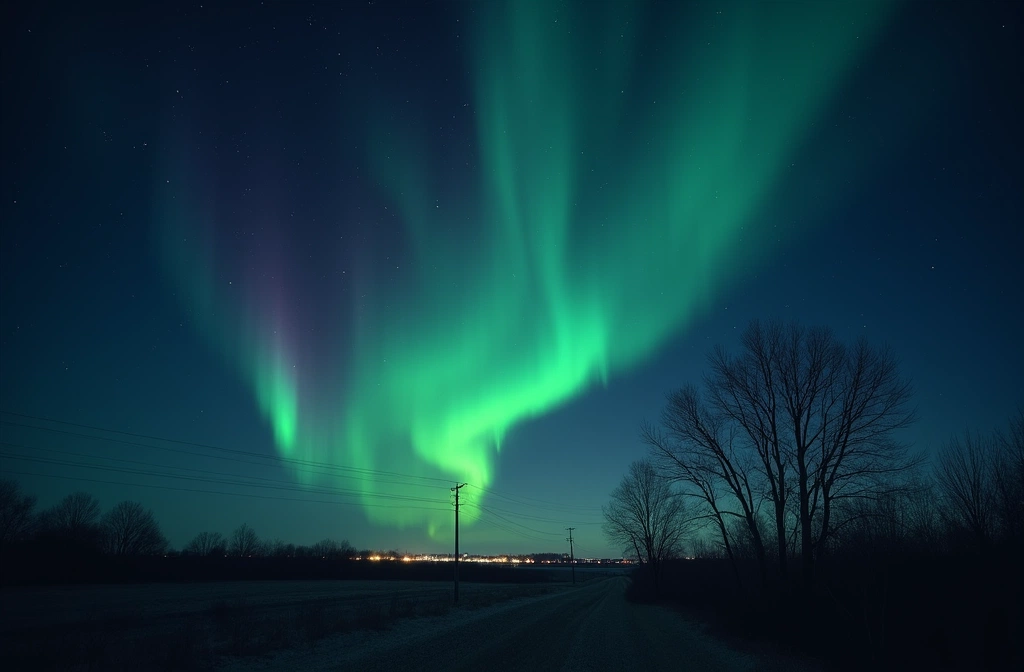
NOAA's Space Weather Prediction Center has issued a G2 (moderate) geomagnetic storm watch for April 17-18, according to reporting by Space.com. Concurrently, forecasters at the U.K. Met Office indicate there is a chance of G3 (strong) intensity bursts if solar activity escalates further.
The atmospheric signature is already measurable: northern lights are expected to push much farther south than typical seasonal norms, potentially reaching visibility in parts of the U.S. as far south as Illinois and Oregon. This geographic expansion is a direct indicator of heightened geomagnetic stress on Earth's magnetosphere.
Why this matters: Geomagnetic storms at G2 and higher levels create measurable risk to power grid stability, transformer saturation, and high-frequency communications—particularly in northern lattitudes where infrastructure is most exposed. While a G2 event is moderate and most modern grids are designed to absorb it, the mention of potential G3 escalation suggests conditions remain unstable and could worsen.
The visibility of aurora at unusually southern latitudes is not merely a spectacle—it's a real-time diagnostic of magnetospheric compression. When auroras push this far south, it means the storm's energy envelope is significant enough to overcome the Earth's shielding in mid-latitude regions.
What to watch: Monitor NOAA's Space Weather Prediction Center updates through April 18 for any official escalation beyond G2. A shift to G3 or higher would warrant direct attention to grid operator statements and any issued alerts. Current conditions remain observable but not yet at cascade-risk thresholds based on available reporting.