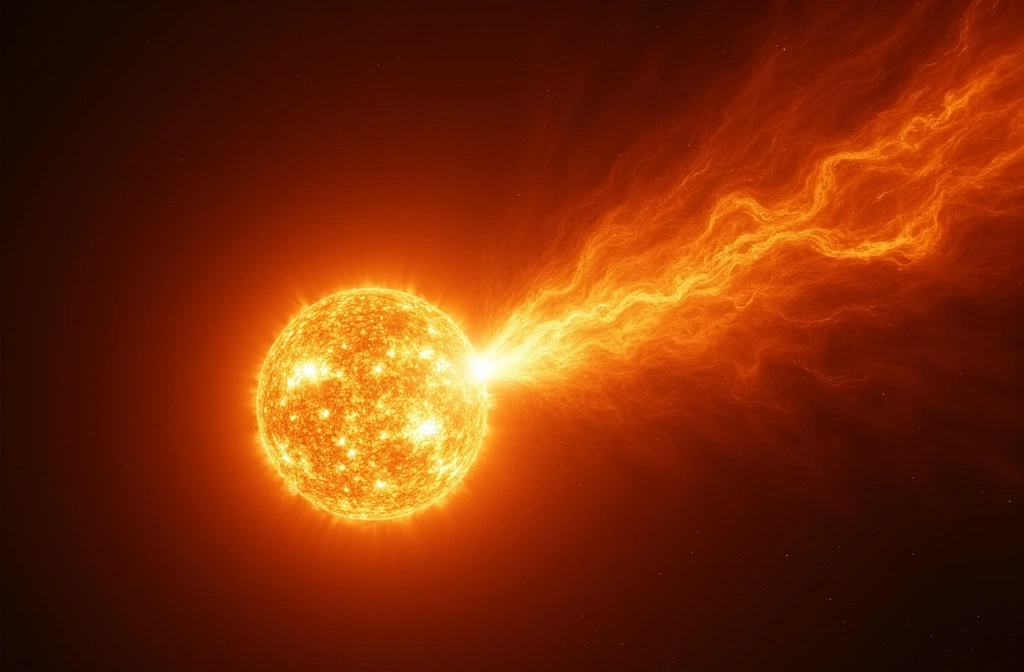
A massive coronal mass ejection (CME) from a solar explosion is in transit toward Earth, according to reporting on NOAA's space weather alerts. The National Oceanic and Atmospheric Administration has issued a G4-class geomagnetic storm watch—a serious designation that reflects the scale of the incoming event.
Geomagnetic storms of G4 magnitude can stress power grid operations, degrade GPS accuracy, disrupt high-frequency radio communications, and increase radiation exposure for aircraft crews and satellites in high orbits. While Earth's magnetosphere provides substantial shielding, infrastructure designed before modern space weather threat modeling may face operational strain during prolonged exposure.
The aurora visibility prediction extending to India—well south of typical auroral zones—indicates the storm's potential strength. Auroral displays at unusual latitudes historically correlate with significant magnetospheric disturbance.
What makes this flash actionable: NOAA's watch status means the threat is credible and monitored in real time, but the window between detection and impact remains fluid. Grid operators and communications providers typically activate contingency protocols on G4 watches, and critical infrastructure operators should assume elevated operational tempo through the event window.
For preparedness-minded readers, this is a live case study in how solar weather integrates into broader resilience planning. Unlike terrestrial emergencies with weeks of warning, geomagnetic storms compress response timelines. GPS-dependent supply chains, financial transaction networks, and cellular backhaul systems all carry embedded solar weather risk that most organizations have not stress-tested at G4 levels in the modern era.
Watch for NOAA updates on actual impact timing and intensity. Real-world performance data from this event—whether the grid holds, where communications degrade, how long recovery takes—will provide hard evidence for future preparedness gap analysis.
