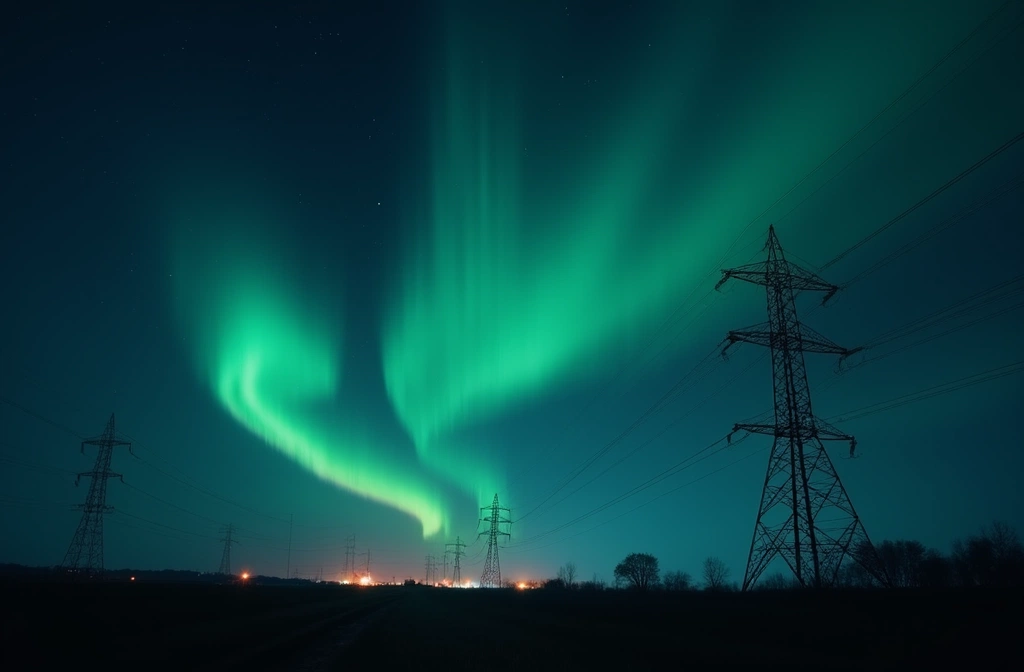
NOAA issued a 'Severe' aurora alert for Thursday, with activity potentially extending into Friday across approximately 25 states, according to reporting from Forbes and The Debrief. This represents an upgrade from earlier forecasts that predicted peak activity would be confined to Friday.
For the vast majority of observers, a severe geomagnetic storm translates to an expanded auroral display—a visual event. But for the preparedness-minded, the distinction matters: geomagnetic storms of this magnitude stress power grids, satellite communications, and GPS-dependent systems. The higher the solar activity, the greater the stress on infrastructure designed to operate within normal geomagnetic conditions.
During severe geomagnetic events (rated G4 on NOAA's five-point scale), localized power grid disruptions have occurred in past cycles. Satellite operators also experience increased drag on orbiting assets, and precision agriculture systems relying on GPS see measurable accuracy degradation. Trans-oceanic aviation and power utilities in high-latitude regions face the highest operational risk.
This event is not a grid-killer—we have not seen evidence of widespread cascading failures at this level—but it is a live stress test. Grid operators are aware and prepared. What matters now is understanding what happens at the edge of your own infrastructure: Does your backup power account for extended outages? Can your communications survive a day without grid power? Are critical medical or heating systems dependent on a single grid connection?
Watch for NOAA's Kp-index readings through Friday. If sustained activity climbs into the G5 range, that shifts the risk calculus meaningfully. For now, this is a reminder that solar-driven infrastructure stress is real, measurable, and cyclical—not speculation.
