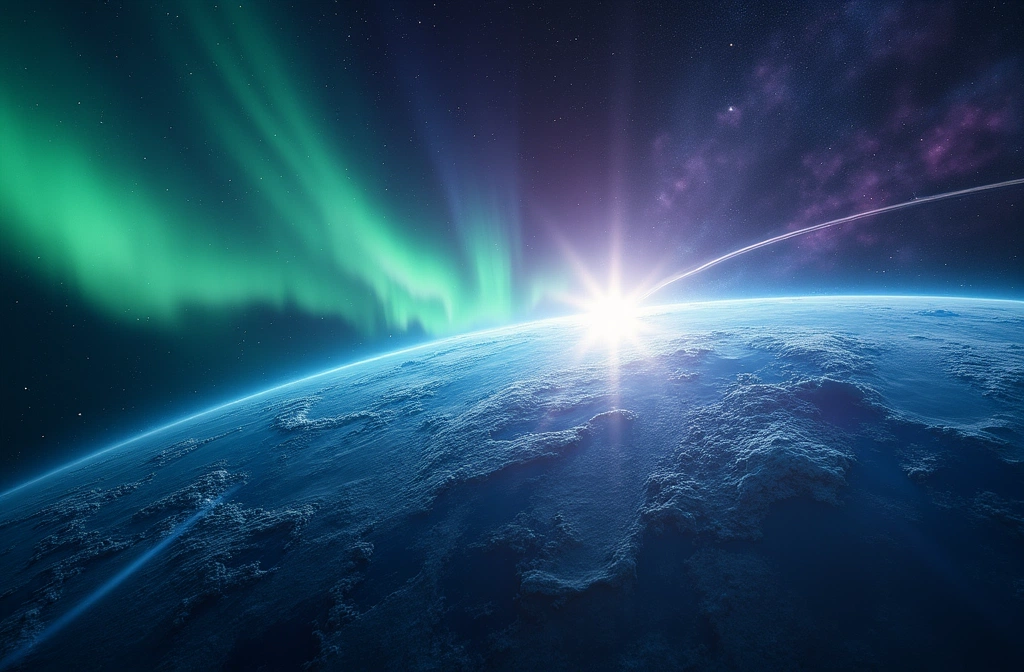
NOAA's Space Weather Prediction Center reported on May 8, 2026, that a geomagnetic storm continues to produce G1 to G2 level disturbances. The storm is in a weakening phase, meaning peak effects have likely passed.
Why this matters: Geomagnetic storms of G1-G2 magnitude pose low to moderate risk to infrastructure. At these levels, power grid operators typically experience minor voltage regulation challenges and satellite operators may see modest tracking issues. High-frequency radio propagation and GPS systems can show intermittent degradation. The aurora visibility—often noted in public reporting—is actually a symptom, not the threat; the real concern is the energetic particle influx affecting systems at higher altitudes and sensitive electronics.
The G-scale ranges from G1 (minor) to G5 (extreme). Events in the G1-G2 range occur regularly during solar active periods and grid operators have established protocols to manage them. This does not represent an imminent escalation to higher severity levels.
However, this event serves as a useful reminder: geomagnetic storms can occur with limited advance warning, and the May 2026 storm demonstrates that space weather monitoring remains active. Systems dependent on continuous grid power, satellite communications, or precise timing (financial networks, emergency services) experience measurable stress even at lower G-levels.
What to watch: Monitor NOAA Space Weather Prediction Center bulletins for any reclassification upward. The next 48-72 hours will clarify whether this storm fully dissipates or produces secondary waves. Track whether grid operators issue any operational advisories—public utility notifications are reliable early indicators of infrastructure stress.