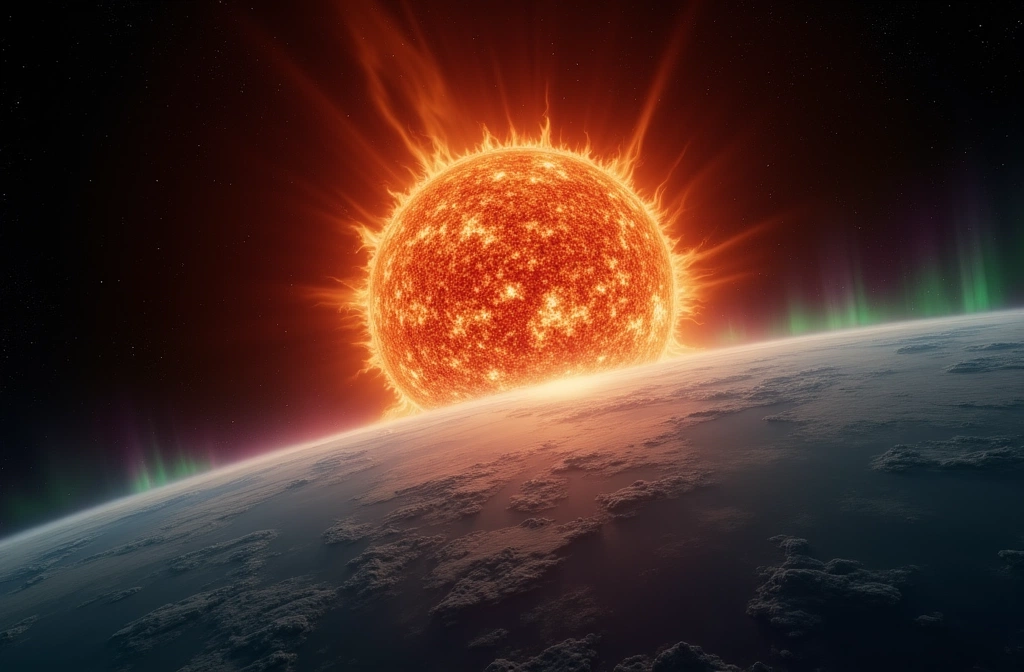
NOAA's Space Weather Prediction Center is tracking multiple coronal mass ejections (CMEs) heading toward Earth, according to the WSA-ENLIL solar wind model. These faint CMEs may deliver glancing blows to Earth's magnetosphere over the coming day, potentially triggering G1 (minor) geomagnetic storms.
Why this matters: G1-level storms are low-severity events, but they're the baseline signal of solar activity reaching our planet. The WSA-ENLIL model maps solar wind density and speed as material travels outbound from the sun, giving forecasters lead time to estimate arrival windows and intensity.
At the G1 level, impacts are typically mild: minor fluctuations in power grid voltage, occasional impacts to satellite operations, and aurora visibility at high northern and southern latitudes. For most readers, operational risk is minimal. However, this event is a reminder that CME detection infrastructure is functioning and providing real-time tracking—a critical preparedness asset.
The key indicator to watch is whether NOAA upgrades the geomagnetic storm watch to G2 or higher. That would signal stronger solar wind conditions and warrant closer monitoring of critical infrastructure. Grid operators, satellite operators, and communications providers monitor these alerts actively, so cascading failures from a G1 event are unlikely.
Historically, G1 storms occur regularly during solar cycles and are absorbed by modern grid hardening and redundancy systems. The 2003 Halloween storms reached G4 severity and caused significant regional blackouts; by contrast, a G1 event is routine space weather. This event demonstrates the distinction between minor solar activity and the kind of extreme scenarios that actually stress infrastructure.
Stay tuned to NOAA's Space Weather Prediction Center for updates. If conditions escalate, that will be your earliest signal.
