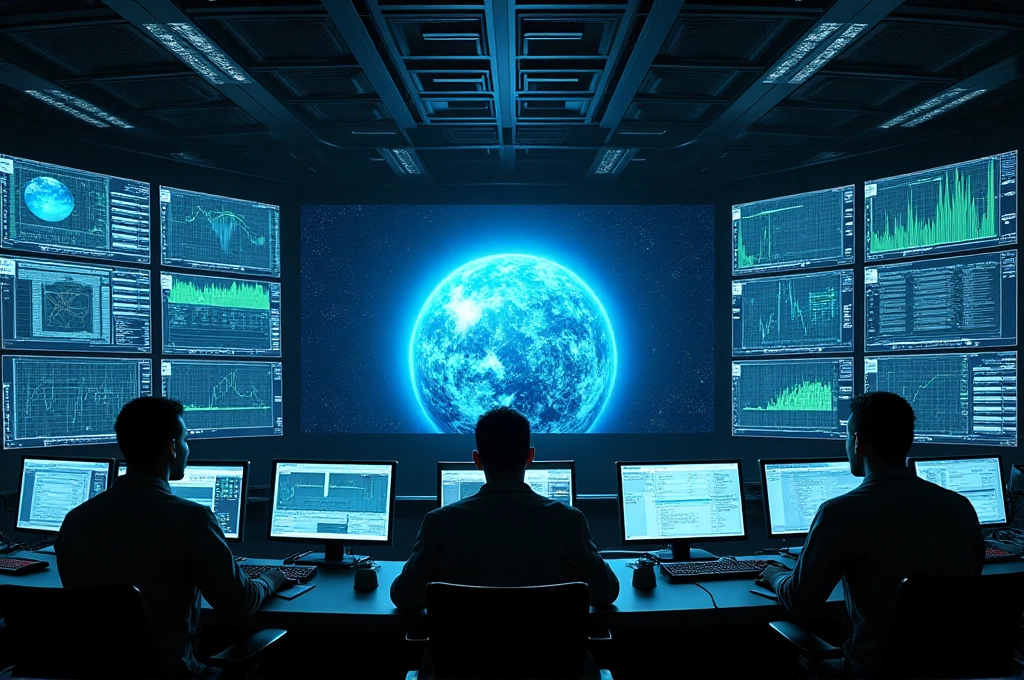
NOAA's Space Weather Prediction Center has officially activated an upgraded solar wind display system, according to the agency's official announcement. The new tool provides enhanced real-time monitoring and visualization of solar wind conditions — the stream of charged particles flowing from the sun that can trigger geomagnetic storms.
Why this matters: Solar wind data is the primary early-warning mechanism for space weather events that threaten the electrical grid, communications networks, and satellite infrastructure. The faster and more accurate NOAA can detect and characterize changes in solar wind speed, density, and magnetic orientation, the more time grid operators and emergency managers have to implement protective measures — load shedding, transformer isolation, or temporary service reductions that limit cascading blackouts.
This is capability improvement, not threat escalation. The current solar cycle (Cycle 25) remains active, and geomagnetic disturbances continue to occur. Better observational tools don't change the underlying risk; they reduce reaction time and increase the probability that protective actions succeed rather than fail.
The critical variable now is adoption: whether regional transmission operators, utility companies, and emergency management agencies actually integrate this new NOAA data stream into their operational workflows and decision protocols. A sharper warning means nothing if it doesn't reach the people who control the switches.
Historically, the 1859 Carrington Event and the 1989 Quebec blackout both occurred in an era of minimal solar wind monitoring. Had real-time data been available, operators would have had hours to days to prepare. We now have that capability. Whether infrastructure operators use it remains an open question.
