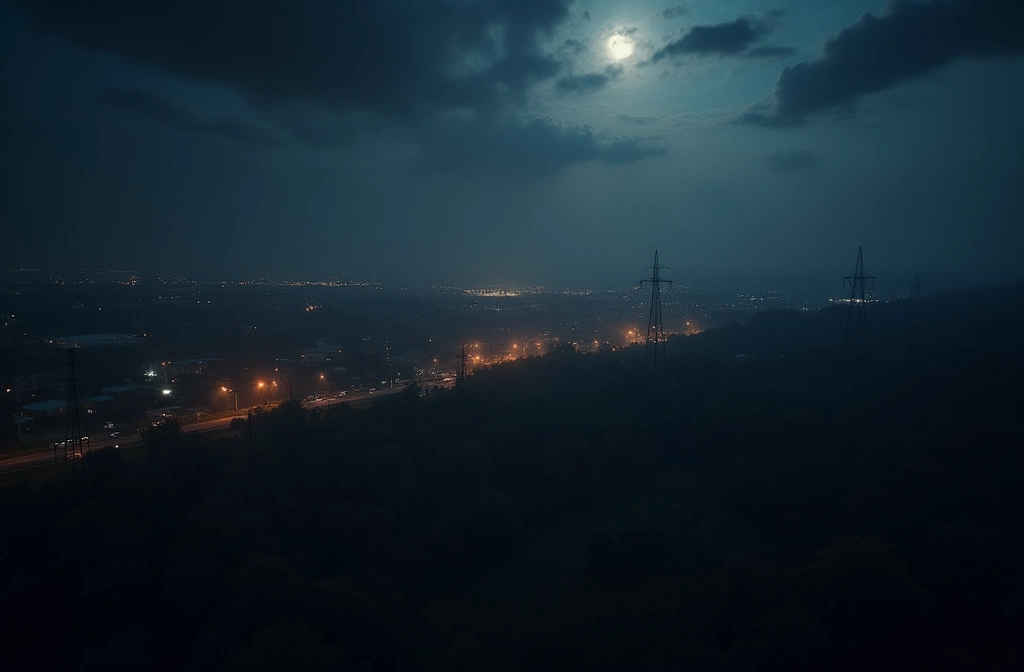
According to NBC Chicago, widespread power outages in northwest Indiana following catastrophic storms earlier this week reached such magnitude that they became visible from space. Satellite imagery captured the affected region as a distinct dark zone, indicating simultaneous failure across multiple grid sectors—a marker of cascading infrastructure breakdown rather than isolated failures.
This observation matters. When outages become visible at orbital altitude, you're looking at a multi-county or regional grid collapse, not localized service interruptions. Satellite visibility suggests either:
• Simultaneous loss of multiple transmission or distribution nodes • Widespread damage to substations or switching infrastructure • Cascading load-shedding across interconnected systems
The storm-trigger is clear. The scale is measurable. What remains unclear from available reporting is restoration timeline, customer count affected, or specific infrastructure damage sustained. NBC Chicago's reporting does not specify these details.
For infrastructure-aware readers, this event illustrates how modern grid vulnerabilities cluster geographically. Northwest Indiana's grid exposure to severe weather—particularly wind and lightning from catastrophic storms—appears less hardened than required for present-day storm intensity. Visible-from-space outages signal infrastructure operating near or at failure thresholds.
The cascading risk vector matters here. Regional grid collapse typically triggers secondary failures: fuel pump outages, water treatment disruption, communications tower battery depletion, and hospital backup power draw. Those failures weren't mentioned in NBC Chicago's reporting, but they typically follow large-scale outages on a 6-48 hour lag curve.
Watch for: official restoration timelines (when MISO or regional operators announce full service restoration), whether utilities issue infrastructure hardening statements post-event, and whether state regulators open inquiries into grid resilience standards. A visible-from-space outage typically triggers regulatory scrutiny.
