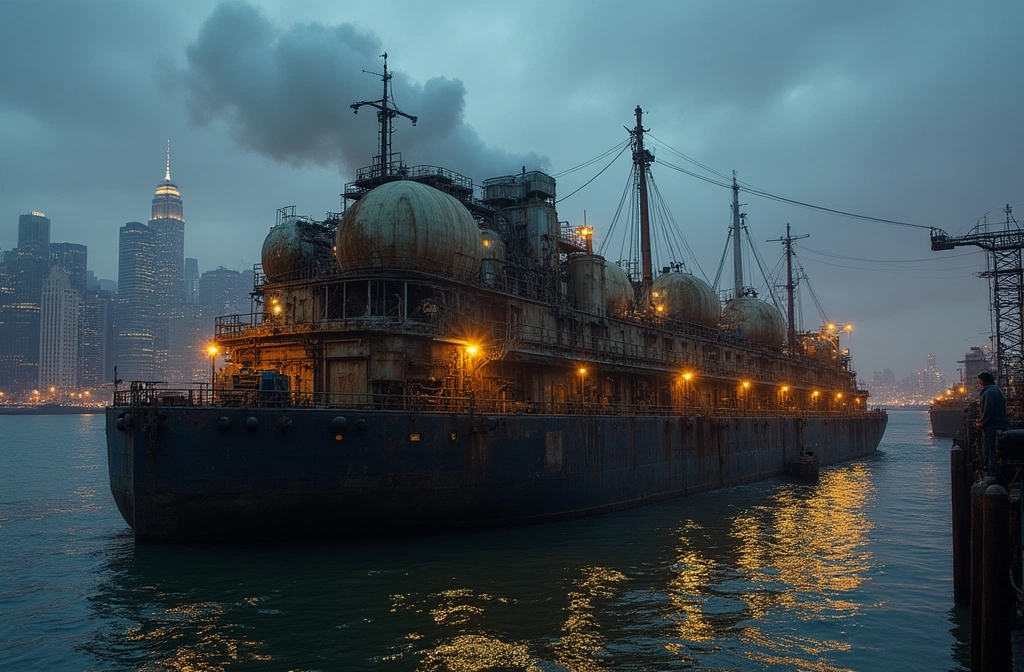
According to the Hanford Sentinel, two floating power stations off Brooklyn's Sunset Park—The Narrows and Gowanus plants—were activated during intense heat in New York City last month. These barge-based generators serve as emergency capacity when peak demand strains the conventional grid.
This activation matters because it reveals a critical dependency: when normal generation and transmission cannot meet demand, the grid operator reaches for infrastructure explicitly designed as a temporary or supplemental solution. Floating power plants are inherently constrained—limited by waterway conditions, fuel supply logistics, and age-related reliability risks. The fact that both units were needed simultaneously during a single heat event suggests the conventional system is operating closer to its margin than infrastructure planning typically allows.
The age of these facilities adds another layer of concern. Aging infrastructure requires higher maintenance, has lower mean time between failures, and carries elevated risk of unexpected outages precisely when demand is highest. If either barge experiences mechanical failure or maintenance issues during the next peak demand event, the grid loses capacity it cannot quickly replace.
This pattern—heat spike triggers emergency asset activation—will likely repeat as climate patterns continue to drive higher cooling loads. What to monitor: (1) frequency of barge activation in coming summers; (2) any reported mechanical issues or downtime on either unit; (3) whether grid operators announce additional emergency capacity projects. A second or third activation season may signal the grid has structurally outgrown available baseload capacity.
For preparedness purposes, this confirms what grid analysts have long emphasized: regional blackout risk is real during extreme weather, and it correlates directly with visible stress on emergency systems. Areas dependent on consolidated generation and long transmission runs face higher vulnerability than distributed systems.
