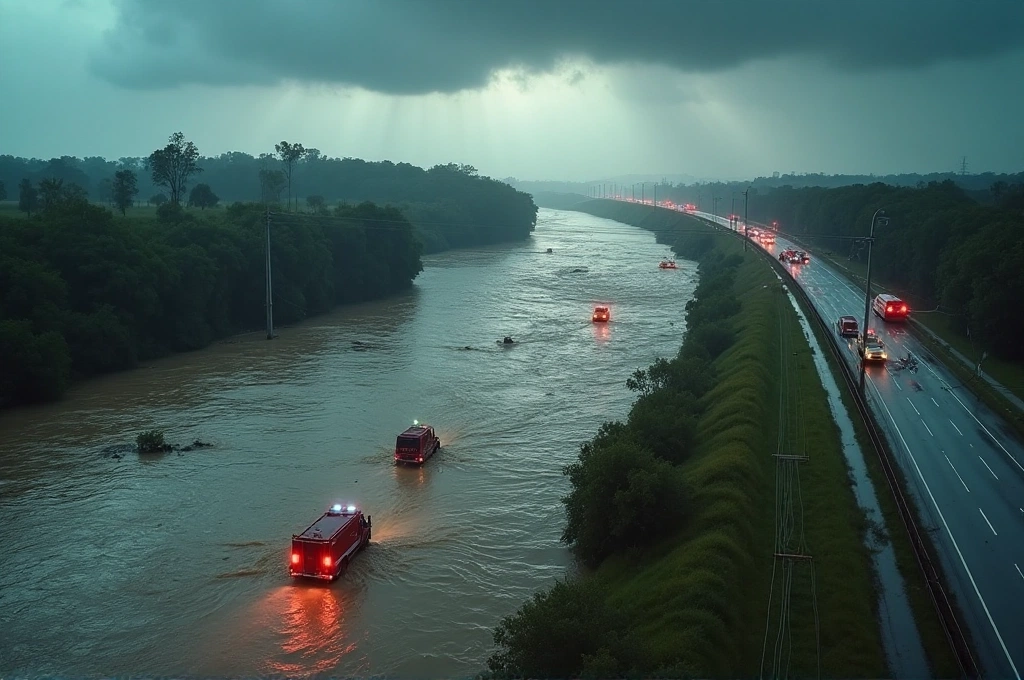
According to the EM Morning Brief, mandatory evacuation orders are in effect at Buckeye Lake as the Ohio Valley experiences significant flooding. Interstate 70 has been closed in both directions—a critical supply and mobility corridor—and water rescue operations are active across central Ohio. The timing is critical: Indiana is simultaneously managing day ten of a major outage, with its state Emergency Operations Center still activated. This convergence of water infrastructure stress and prolonged power loss across a multi-state region creates cascading risk.
The Pacific theater adds pressure. Tropical Storm Saudel is strengthening toward typhoon force, with Typhoon Warnings already issued for Pagan and Agrihan. Hurricane Lala's status is also tracked in the same system.
What matters: Interstate 70 is a lifeline for freight, fuel distribution, and regional evacuation routing. Its closure—even partial—constrains logistics across the Midwest. When paired with an active, sustained power outage in Indiana (day ten suggests this is not a brief event), supply chain resilience becomes measurable and vulnerable. Buckeye Lake evacuation signals water-system stress; if dam or spillway infrastructure is compromised, downstream consequences ripple quickly.
The concurrent typhoon activity in the Pacific does not directly impact U.S. mainland operations at this moment, but it signals active, multi-theater weather stress on critical infrastructure systems—particularly if either storm impacts shipping lanes, port operations, or supply chains dependent on Pacific routes.
Watch indicators: Duration of Indiana's outage (power restoration timelines), I-70 reopening progress (real-time DOT updates), water-level trends at Buckeye Lake (Army Corps of Engineers data), and Saudel's track and intensity forecasts (National Weather Service). If any of these remain unresolved beyond 48-72 hours, supply chain friction becomes operational reality, not theoretical risk.
