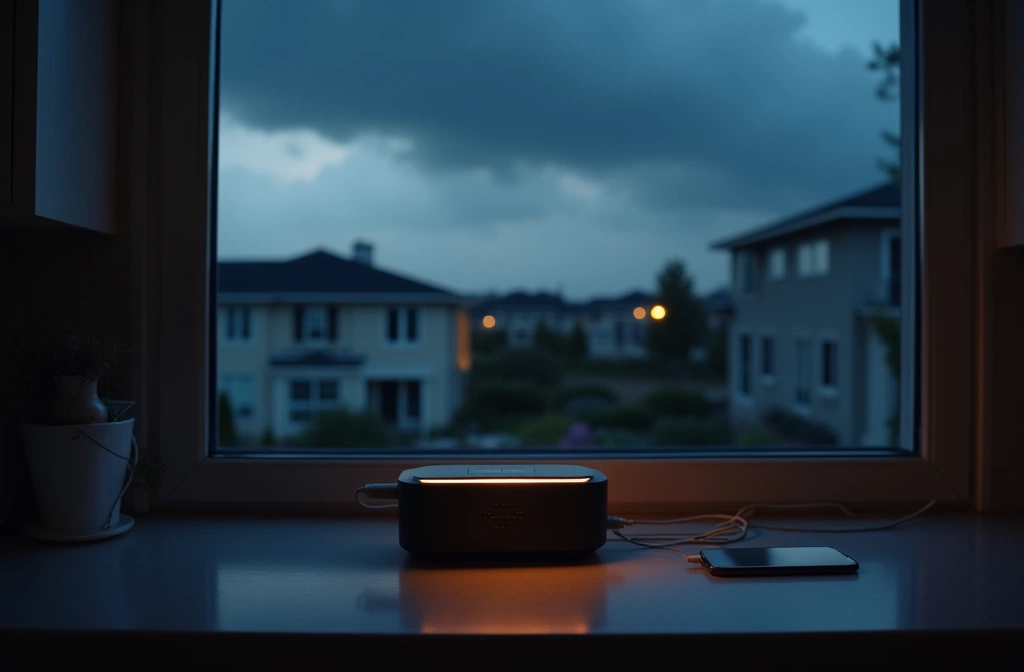
According to a product roundup published by powersof10.com, portable power stations designed for blackout scenarios are gaining traction among consumers managing infrequent, short-duration power disruptions. The source identifies units optimized for essential loads—phone charging and lighting—with compact form factors suitable for closet storage, vehicle transport, or field use.
Key characteristics noted: solar panel compatibility enabling basic off-grid charging cycles, straightforward industrial design prioritizing function over aesthetics, and weight/size ratios that reduce adoption friction for non-specialist consumers.
Why this matters: Consumer-grade portable power adoption may indicate a measurable shift in baseline risk perception around grid reliability. When mainstream product reviews begin featuring off-grid capability as standard specification language, it signals market demand moving beyond enthusiasts. This mirrors earlier adoption curves in backup power (generators, UPS systems) before those became commonplace household items.
The emphasis on solar compatibility is notable—it reduces dependency on fuel supply chains and grid recharge cycles, creating genuine off-grid capability for households managing extended outages. For areas experiencing recurring but unpredictable outages, this approach addresses a legitimate infrastructure gap without requiring permanent installation or significant capital outlay.
Systemic angle: If portable power adoption accelerates, it may create a secondary market effect—supply chain consolidation, standardization of charging protocols, and cost compression that further lowers adoption barriers. This can either improve grid resilience (distributed, household-level backup) or mask underlying transmission/distribution failures by allowing consumers to absorb outage costs privately rather than pressuring utilities for infrastructure investment.
Current data is limited to a single product assessment; broader market trend confirmation would require tracking adoption rates, regional concentration, and utility response patterns. Monitor whether grid operators acknowledge distributed home backup as infrastructure planning variable, or whether utilities treat household power stations as market noise.
