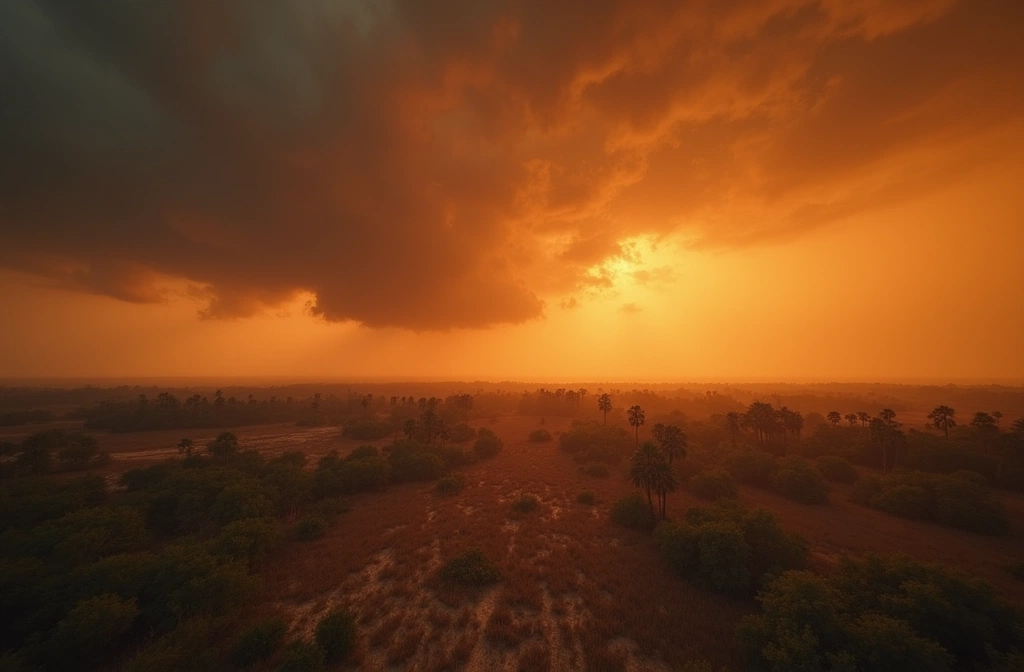
WGCU News reported that strong northerly winds are arriving across Florida alongside very dry air, triggering Red Flag Warnings across much of the state's peninsula. Red Flag Warnings indicate conditions favorable for rapid fire spread and are issued when multiple fire weather factors align.
Why this matters: Elevated fire danger in Florida creates dual risks. First, residential and wildland fires can spread quickly under these conditions, straining emergency response capacity across the region. Second, large-scale fires degrade air quality and can disrupt transportation, evacuation routes, and emergency services if multiple incidents spike simultaneously.
Florida's fire season dynamics are driven by seasonal drought cycles and wind patterns. When dry air and strong winds converge—as WGCU News indicates is occurring—fire management agencies shift to heightened alert posture. The geographic scope (much of the peninsula) suggests the warning applies to a broad area rather than isolated counties.
What to watch: Monitor local fire bans and burn restrictions, which typically tighten under Red Flag conditions. Watch for smoke advisories or air quality alerts in your area, which indicate active fire activity. Check your county emergency management office for evacuation zone maps and shelter locations, particularly if you live in wildland-urban interface areas. Keep vehicle fuel tanks at least half-full and maintain a grab-and-go document folder with critical records in an accessible location.
For those in affected zones, this is a practical window to test your family communication plan and verify that outdoor fuel sources (propane grills, firewood piles) are positioned defensibly away from structures. If you live in a fire-prone area, this is also a signal to clear gutters and trim tree branches overhanging rooflines—basic maintenance that pays dividends during high-fire-danger windows.
