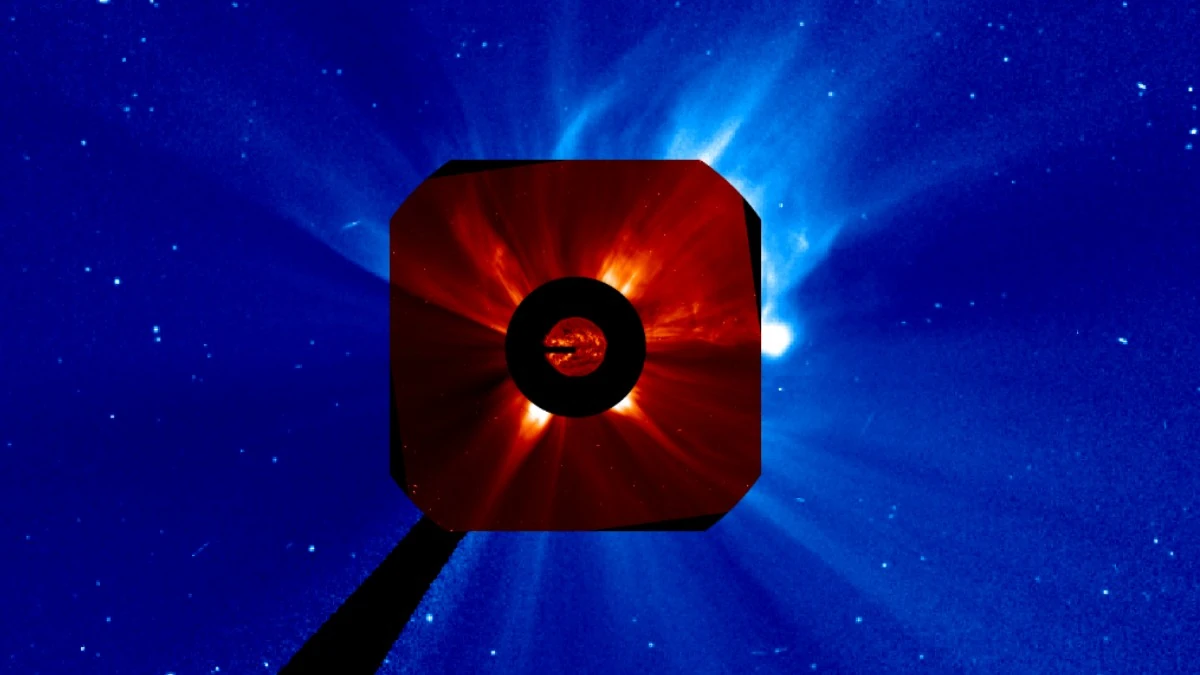
On May 26, 2026, high-energy solar protons briefly reached S1 (Minor) solar radiation storm levels, according to The Watchers. The trigger: a large partial halo coronal mass ejection (CME) originating from the far side of the Sun—the hemisphere we cannot directly observe.
This matters. Far-side CMEs represent a fundamental gap in Earth's solar early warning capability. Unlike Earth-facing events, they arrive with minimal advance notice. While this event remained brief and at S1 (the lowest threshold for radiation storms), it demonstrates that the Sun's hidden side remains a live threat vector.
S1 storms typically produce minor impacts: minor impacts on HF radio propagation, occasional satellite anomalies, and negligible grid stress. But the mechanism is clear—energetic protons accelerated by a distant eruption crossed 93 million miles and registered on our instruments. Scale that event up, aim it at Earth, and you're discussing S4 or S5 conditions that do strain transformers and disrupt long-distance communications.
The far-side blind spot is structural. Solar observatories like SOHO and STEREO provide extended warning when Earth-facing events occur. Far-side eruptions? They become visible only when plasma reaches Earth's neighborhood or when secondary indicators (radio bursts, X-ray signatures) are detected in real time. By then, minutes matter.
For infrastructure operators and grid managers, this event is a data point in an ongoing stress test: Can protocols handle rapid S-scale escalation with compressed warning windows? For preppers, it's a reminder that solar threats don't announce themselves according to convenient timelines.
The event itself has passed. But the question it raises remains active: How prepared is critical infrastructure for a high-energy solar proton storm with no advance notice? The answer, for most systems, is still being written.
