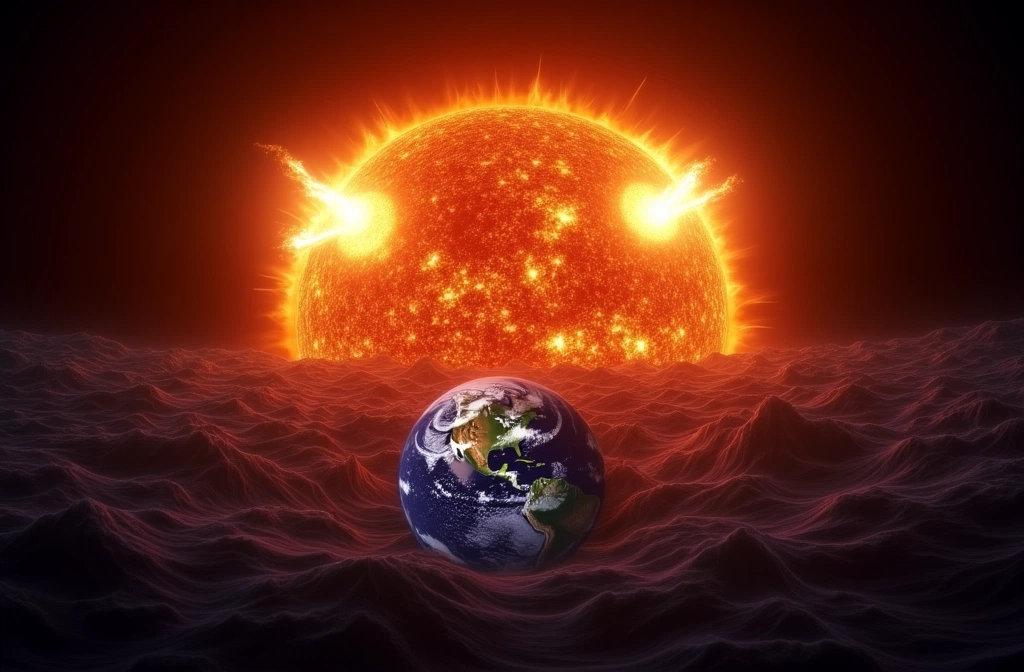
On August 14, 2026, a second solar eruption was observed from the same active region that produced an initial filament eruption on August 13, according to Earth Sky reporting on NOAA data. The second event occurred around 12 UTC and ejected plasma into space, captured by the GOES-19 SUVI instrument at 304 angstrom wavelength. NOAA is forecasting possible G1 (minor) geomagnetic storming levels as the coronal mass ejection (CME) transits toward Earth.
G1-class geomagnetic storms represent the lowest level on NOAA's 5-tier scale (G1-G5). At this intensity, impacts are typically limited to power grid fluctuations in high-latitude regions, minor degradation of satellite operations, and occasional auroral visibility at northern latitudes. Communications systems and GPS generally remain unaffected at G1 severity.
What matters for preparedness: Repeated eruptions from the same solar region suggest sustained magnetic instability on the sun. While the current forecast calls for minor effects, successive CMEs from a single active area could escalate in magnitude or frequency—a pattern that warrants continued monitoring. Grid operators in northern regions should be alert to voltage regulation demands during the passage of this CME.
For infrastructure-dependent operations, this event is a low-severity reminder that solar activity follows observable patterns. Earth Sky and NOAA provide real-time tracking of CME arrival and geomagnetic indices (Kp index) that can be monitored at space.weather.gov. Readers managing critical systems should verify their access to live space weather data and confirm procedures for responding to elevated geomagnetic activity if operations require it.
The broader signal: second events from the same region can indicate an active solar cycle phase. Monitor NOAA's 3-day geomagnetic forecasts for any escalation beyond G1 levels.
