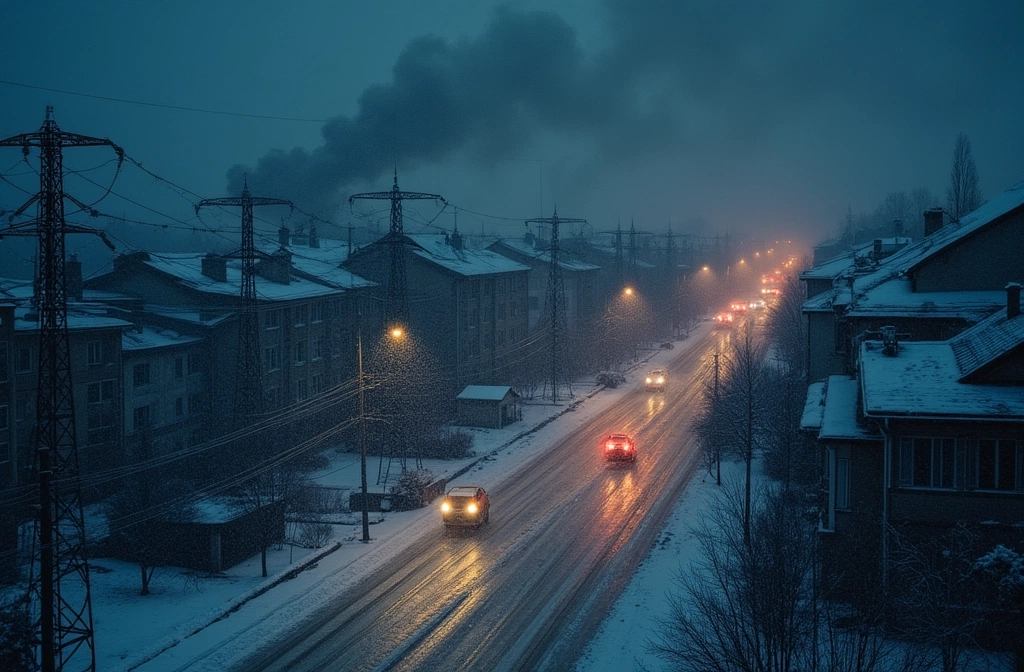
According to UNN, six Ukrainian regions are partially without power, with emergency blackouts currently in effect in Sumy and Sumy district. The same report indicates that weather-related factors have de-energized 10 settlements in Khmelnytskyi region, suggesting compound stressors on regional infrastructure.
What matters: This event demonstrates a critical pattern in grid resilience — the convergence of attack-driven outages and environmental pressure points (severe weather) occurring simultaneously. When multiple failure vectors hit the same network in parallel, recovery time extends and cascading effects amplify. Ukraine's grid has absorbed repeated targeting; this incident shows the margin for error is narrowing.
The scale here — six regions affected — indicates either widespread damage or a coordinated strike profile. UNN's documentation of both attack-driven and weather-driven outages in the same timeframe is significant: it reveals how infrastructure stress compounds. A degraded grid already managing attack damage has reduced capacity to handle weather events it would normally absorb.
For preparedness readers, this is a case study in layered failure. In your own region, this raises a specific question: what happens to your critical systems if two failure modes activate within 24-48 hours? Most household and small-business resilience planning assumes single-mode failure (storm OR attack OR equipment failure). This event suggests that assumption may be optimistic.
Watch the repair timelines closely. If UNN or regional authorities report multi-day restoration windows, that signals deeper damage to generation or transmission assets — not just local distribution. Extended outage windows (48+ hours across six regions) would indicate the grid is operating at reduced capacity heading into continued operations.
This is not apocalyptic; it is operational intelligence. The grid is being stress-tested in real time, and the results are being logged.
