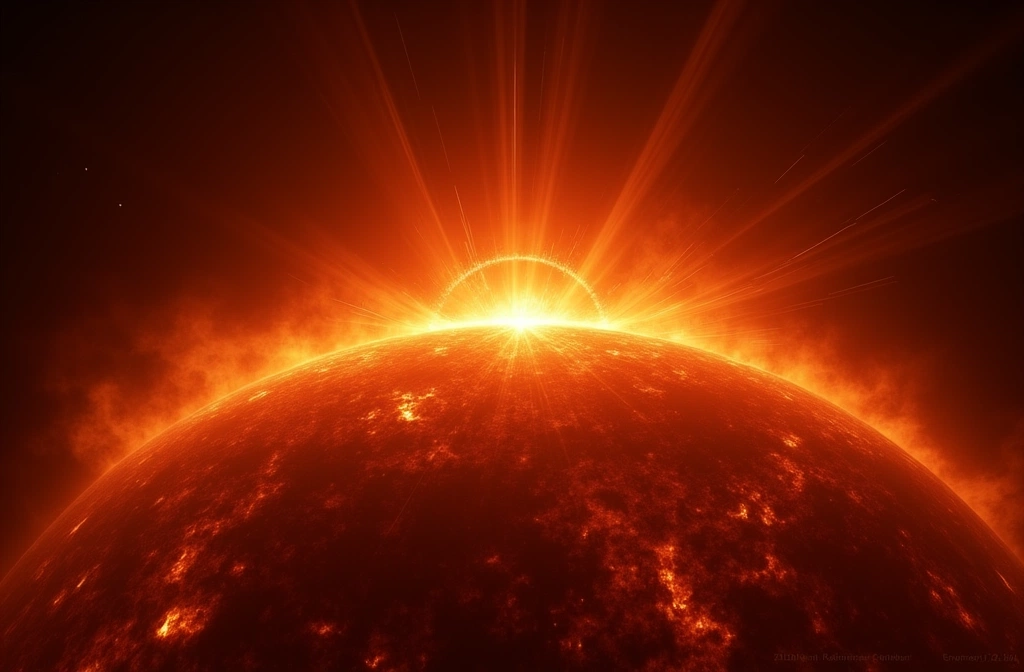
According to EarthSky reporting on NOAA data, solar filament activity in early August 2026 has hurled ejecta into space with the potential to reach Earth. NOAA forecasts indicate that conditions may increase to minor geomagnetic storm levels on August 7, though the incoming plasma is expected to deliver only a weak glancing blow to Earth's magnetosphere.
This activity occurs during Solar Cycle 25, which continues to exhibit variable behavior. Notably, NOAA observations indicate that flare activity remains at very low levels despite ongoing prominence displays—long arcs of solar material held aloft by the sun's magnetic fields.
Why it matters: Even minor geomagnetic storms can produce measurable effects on power grid operations, satellite communications, and high-frequency radio systems. Ground-based infrastructure tied to long transmission lines is most vulnerable. Airlines may adjust routes over polar regions, and operators of sensitive electronics typically implement standard precautions during these events.
For preparedness practitioners, the signal here is straightforward: Solar Cycle 25 remains active and capable of generating space weather events. While this particular event is forecast as minor, it underscores the reality that solar-driven geomagnetic disturbances are not historical anomalies—they are recurring features of our current solar environment.
What to watch next: Monitor NOAA Space Weather Prediction Center alerts for any upgrade in storm classification or unexpected acceleration of the incoming coronal mass ejection. Minor storms can occasionally intensify if magnetic field geometry is more favorable than initial forecasts suggest. Additionally, watch for any follow-up filament activity over the coming days, which could indicate sustained solar instability in the active region responsible for this ejection.
