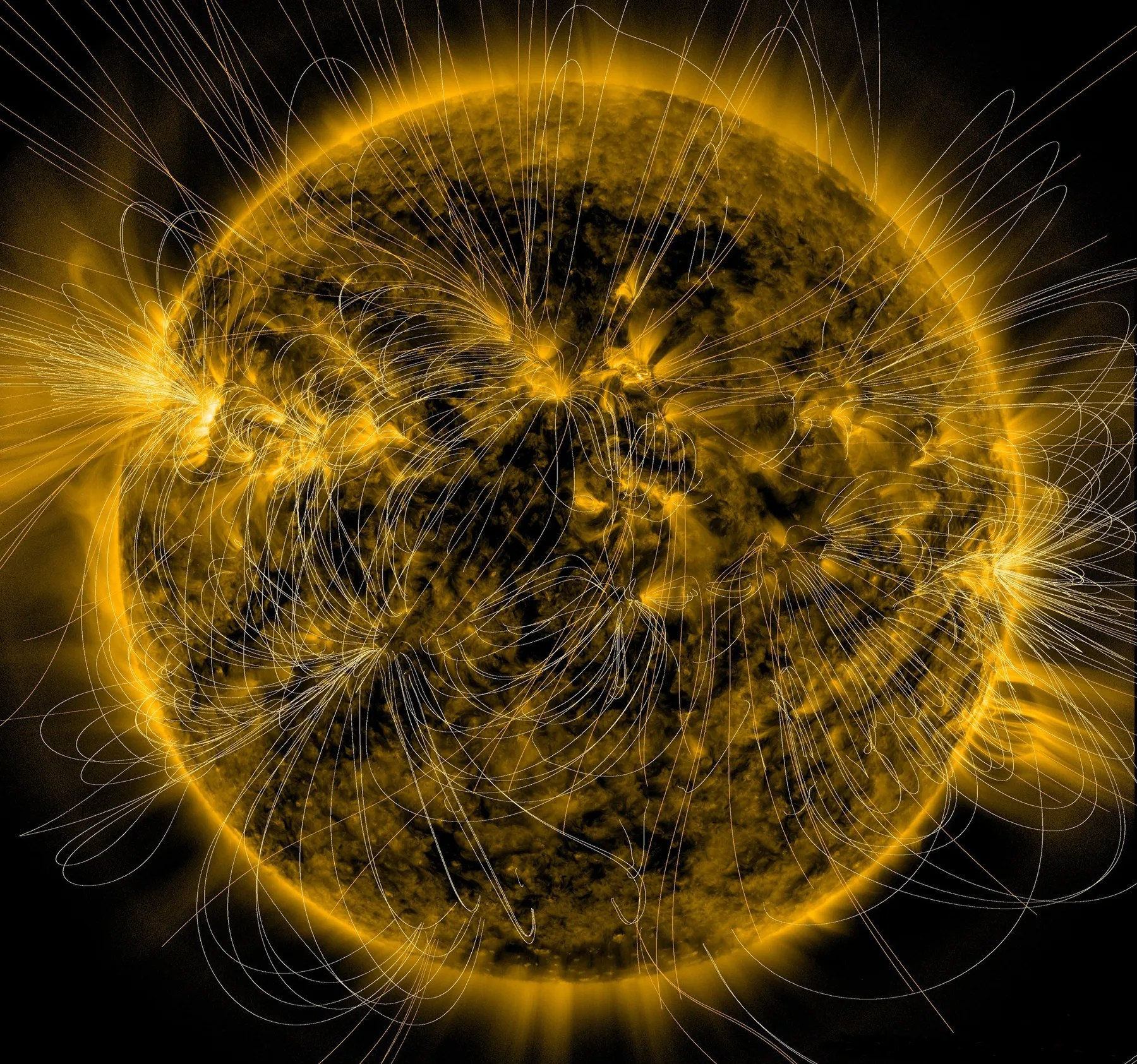
A new helioseismology study from the University of Birmingham has flagged a critical blind spot in solar forecasting models. Using 40 years of BiSON (Bison Oscillation Network) helioseismology data spanning Solar Cycles 22-25, researchers found that the Sun's magnetic activity has retreated toward its surface since 1987—a shift that standard sunspot counts failed to detect.
Why this matters: Space weather forecasting depends on accurate models of solar magnetic behavior. If current models are miscalibrated—missing structural changes in how the Sun generates and stores magnetic energy—then predictions of geomagnetic storm intensity, timing, and impact may be systematically off. This directly affects our ability to anticipate grid stress, transformer damage risk, and satellite disruption scenarios.
The Birmingham study suggests the problem isn't new observations, but reinterpretation of existing data through a higher-resolution lens. Helioseismology detects wave patterns in the Sun's interior, revealing magnetic structure that surface-level sunspot counting cannot capture. The researchers' use of four decades of consistent BiSON measurements lends credibility to the finding.
This is not a prediction of imminent solar danger—it's a calibration correction. But it highlights a persistent challenge in space weather intelligence: our forecasting tools are only as good as the physics we embed in them, and the Sun continues to surprise us.
What to watch: Monitor whether NOAA, the Space Weather Prediction Center, or international solar research agencies acknowledge and incorporate these findings into their operational models. A lag between academic discovery and operational forecasting is normal, but the timeline for model updates matters. Pay attention to any official announcements of model refinements or forecast confidence level adjustments.
