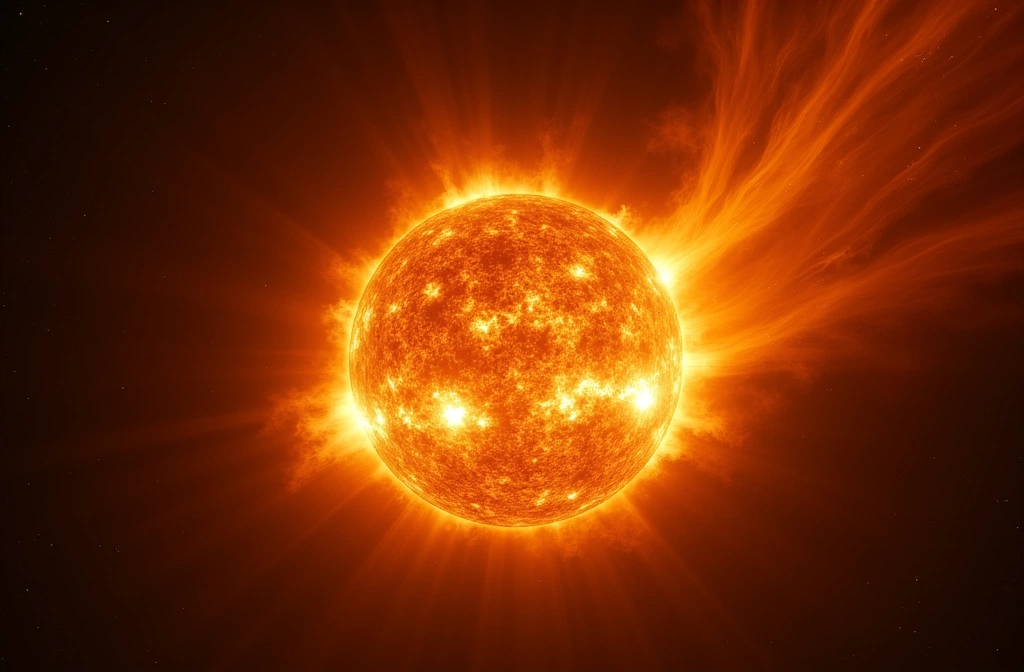
On August 9, 2026, NOAA's GOES-19 SUVI instrument detected a solar prominence erupting westward off the sun, captured at 304 angstrom wavelength. According to reporting from EarthSky, the display came alongside geomagnetic storms, and specialists are actively analyzing the eruption to determine if coronal mass ejection (CME) material is en route to Earth.
This activity marks a slight uptick in solar flare frequency during what has otherwise been a quiet solar period. The timing matters: we're still in Solar Cycle 25, and even modest flares can drive measurable geomagnetic disturbances if Earth-directed.
Why this registers on the preparedness radar: geomagnetic storms degrade high-frequency communications, disrupt GPS accuracy, and stress power grid voltage regulators—particularly at high latitudes. A G1 or G2-level storm (minor to moderate) typically causes temporary HF radio blackouts and minor grid management alerts. Stronger events cascade more severely.
The critical variable right now is trajectory. A westward eruption suggests the CME may or may not be aimed at Earth's magnetosphere; NOAA specialists analyzing the data will clarify this. Their assessment, when published, will determine actual risk level.
This is not a prediction of major disruption. It is observation: the sun is active again in measurable ways, and monitoring systems are doing their job. The quiet sun doesn't stay quiet indefinitely.
Watch for official NOAA Space Weather Prediction Center (SWPC) alerts in the coming hours. They will issue a definitive geomagnetic storm watch or all-clear based on coronal mass ejection arrival estimates. That statement—not speculation—is your signal to adjust monitoring or operational posture.
