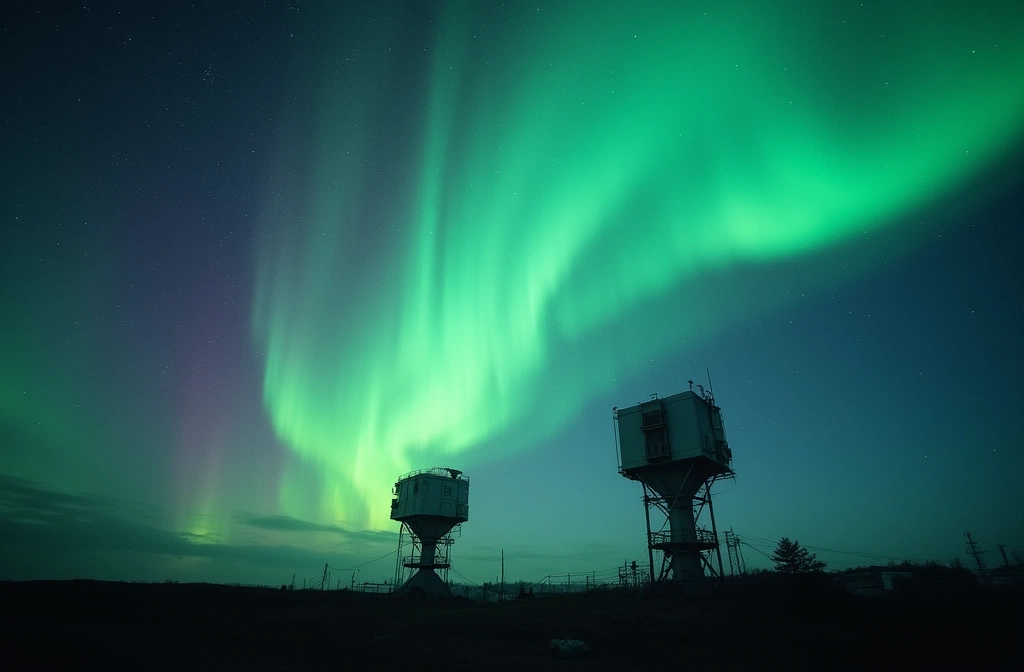
According to Space.com reporting on recent research, crimson auroras observed over Japan stretched hundreds of miles higher into Earth's atmosphere than long-held scientific assumptions about geomagnetic storms would predict. This finding matters because our preparedness models for solar events—including vulnerability assessments for power grids, satellite systems, and communications infrastructure—are built on assumptions about how deep into the atmosphere geomagnetic energy penetrates and how forcefully it interacts with our technological systems.
When observed phenomena deviate from models, it signals a knowledge gap. In this case, the discrepancy suggests that some geomagnetic storms may be stronger or more spatially extensive than current frameworks account for. This has direct implications for infrastructure hardening decisions: if storms reach higher and with greater force than models indicate, then systems we believed protected at certain altitudes or operating parameters may face unexpected vulnerability.
The research does not indicate an imminent threat, but it does highlight a systemic risk pattern worth watching—one that preparedness professionals should flag internally. Our ability to forecast solar impacts depends on accurate models. When observations challenge those models, it creates uncertainty precisely where we need confidence.
For grid operators, satellite operators, and emergency managers, this underscores the value of stress-testing infrastructure assumptions against edge cases. The Japanese aurora data is a reminder that worst-case scenarios may be slightly worse than planning documents assume. This isn't cause for panic recalibration, but it is cause for review. Organizations relying on solar storm impact thresholds should revisit those thresholds in light of evidence that atmospheric penetration depth may have been underestimated.
