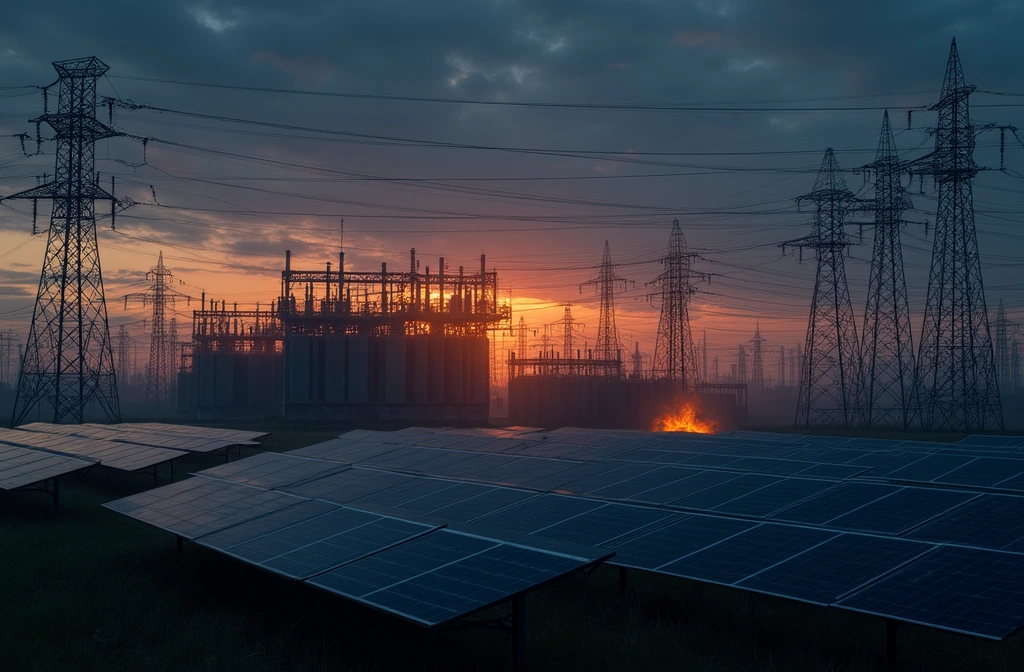
Here's what we know: Spain and Portugal experienced a historic blackout caused by a fast-moving overvoltage event, according to reporting on the incident's technical investigation. This wasn't a cyberattack narrative or a simple renewable energy failure story. The root cause—uncontrolled voltage spikes—revealed gaps in voltage control systems, grid coordination protocols, and legacy operating practices that weren't designed for the speed and variability of modern renewable-heavy power systems.
Why this matters: Overvoltage events move faster than traditional grid protection systems can respond. When voltage control fails across interconnected grids, the cascade can be continental. Spain and Portugal's incident demonstrates that infrastructure weakness isn't always about old technology—it's often about mismatches between aging control logic and new grid architecture. Operators trained on synchronous generation (coal, nuclear) sometimes lack the real-time voltage management tools needed when solar and wind dominate.
The uncomfortable truth the investigation revealed: Renewable energy wasn't the villain. Legacy coordination practices and insufficient voltage regulation were. This suggests the problem isn't whether you use renewables, but whether your grid's protection and control systems are architected to handle them.
What to watch: Pay attention to how grid operators in other renewable-heavy regions respond—Europe's Iberian Peninsula, California, Australia, parts of the Middle East. If voltage control and real-time coordination protocols get upgrades quickly, that's a positive signal. If regulatory bodies continue relying on historical protection schemes designed for slower, more predictable generation, similar events become more likely. Grid modernization isn't optional; it's the actual infrastructure work that determines resilience.
