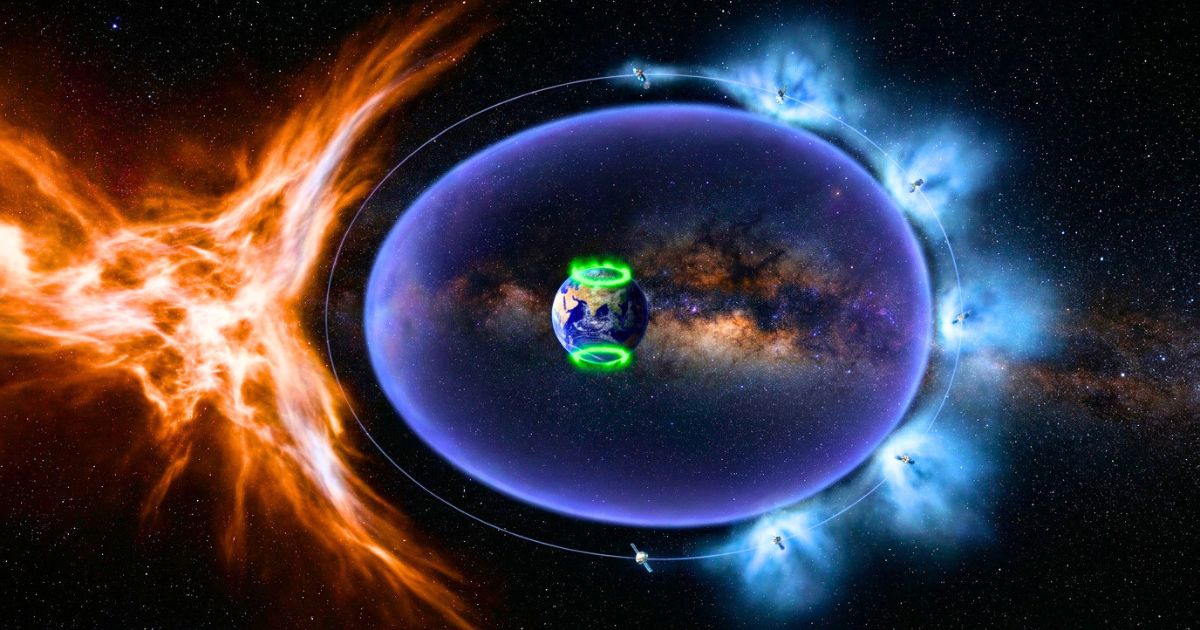
Current operational defense against geomagnetic storms relies entirely on prediction. NOAA's Space Weather Prediction Center operates the DSCOVR satellite at the L1 Lagrange point, approximately 1.5 million kilometers sunward of Earth, which provides roughly 15 to 60 minutes of upstream solar wind data—enough warning time for grid operators to implement protective measures before impact.
A new concept called StormWall, reported by AboveTheNorm News, proposes a different approach: a satellite designed to physically block solar storms rather than simply detect them. The blueprint remains in early conceptual stages and has not been operationalized or officially adopted by any government or space agency.
Why this matters: Current early-warning systems depend on human decision-making and grid operator response within a narrow window. A physical barrier—if technically feasible—would remove that decision lag and human error from the equation. However, the source material does not specify the mechanism by which such a barrier would function, its feasibility, cost, timeline for development, or support from space agencies.
The emergence of this concept may suggest growing recognition among space technology analysts that prediction alone may be insufficient for protecting critical infrastructure against severe geomagnetic events. Historical records show that solar storms of sufficient magnitude have caused widespread blackouts; preparedness planning has traditionally centered on prediction and rapid grid response.
What to watch: Whether StormWall gains formal study from NOAA, NASA, or international space agencies; technical publications detailing the proposed mechanism; any funding allocation or government roadmap toward development. Simultaneously, continue monitoring DSCOVR's operational status and NOAA's prediction accuracy, which remain the primary defense layer for the foreseeable future.
