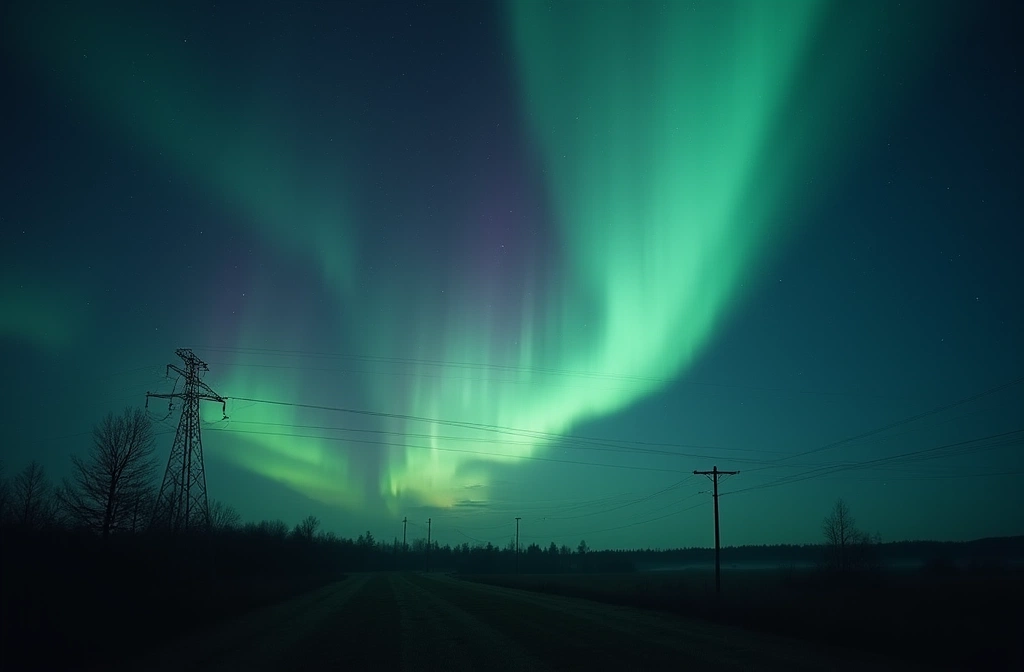
NOAA has forecasted a strong geomagnetic storm capable of producing visible auroras across unusually southern latitudes, including Pennsylvania, according to multiple reports from AccuWeather and MSN. The event is currently active as of April 10-11, 2026.
Geomagnetic storms occur when solar wind conditions compress Earth's magnetosphere and trigger auroral displays. This particular storm is classified as strong but not extreme—there is no indication in available reports of a G5-level (most severe) event.
Why this matters: Strong geomagnetic storms can affect power grids, satellite communications, and GPS-dependent systems, though effects depend on storm intensity and infrastructure resilience. NOAA's Space Weather Prediction Center monitors these events specifically because of grid and communications risk. However, most modern power systems in North America have hardening measures in place following lessons from the 1989 Quebec blackout caused by a geomagnetic event.
What to watch: Baseline actions include:
- Monitor NOAA Space Weather Prediction Center updates for any escalation in storm classification
- Note whether utilities issue grid-stress alerts (uncommon but possible during strong events)
- Track if satellite operators report service degradation in specific systems
This event should not trigger emergency response, but it reinforces why grid operators, telecom firms, and critical infrastructure operators maintain geomagnetic storm protocols. For preparedness practitioners, it's a real-world reminder that solar events are a credible, recurring risk—not theoretical.
Expect auroral displays in northern regions and possibly mid-latitudes tonight and potentially through April 12. This is primarily a spectacle event, not an infrastructure emergency—so far.