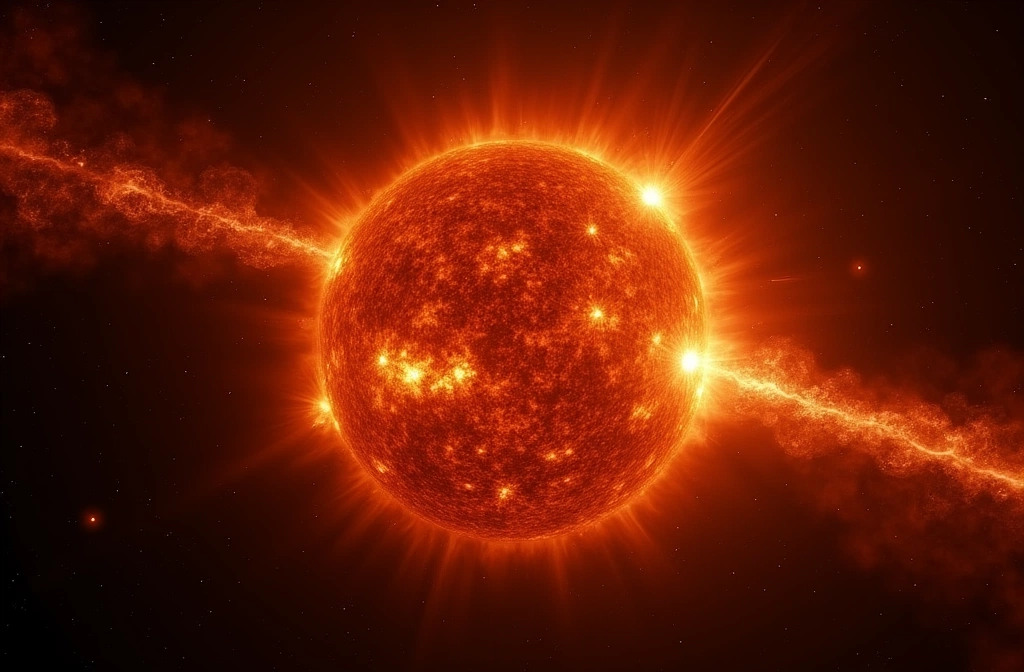
Sunspot region 4366 is rotating into a more favorable position to launch Earth-directed coronal mass ejections (CMEs) later this week, according to reports citing NOAA space weather data. Unlike solar flares alone, CMEs produce the geomagnetic storms that drive aurora activity and carry measurable risk to power infrastructure.
NOAA's alert framework indicates a G2-class geomagnetic storm could push aurora visibility as far south as Oregon, Wyoming, Nebraska, Iowa, Illinois, Indiana, Ohio, New York, Vermont, and New Hampshire—affecting roughly 20 U.S. states. While aurora at mid-northern latitudes is visually dramatic, it signals real magnetospheric activity.
Why this matters: G2-level storms are moderate-class events. They can induce ground currents in long transmission lines, trigger protective relay systems, and stress transformer infrastructure—particularly in vulnerable grids with aging components or insufficient surge protection. Historical G2 events have caused localized power management issues and brief voltage regulation problems. The risk scales upward if the storm strengthens to G3 or higher, or if multiple CMEs arrive in succession.
What to watch: The timing and strength of CME arrival remain the critical variables. NOAA will issue updated space weather forecasts as the week progresses. Any escalation in storm classification (G3, G4) would signal increased infrastructure stress and warrant closer attention to grid operator advisories. Multiple CMEs within 24-48 hours would compound cumulative ground current effects.
For preparedness: Verify backup power systems are operational and fuel reserves are current. Ensure critical battery backups (medical devices, communication equipment, water systems) are charged. Monitor NOAA Space Weather Prediction Center forecasts through the weekend. If you operate grid-dependent infrastructure, coordinate with your utility's emergency operations center—G2 storms typically trigger enhanced monitoring, not emergency protocols, but situational awareness matters.
