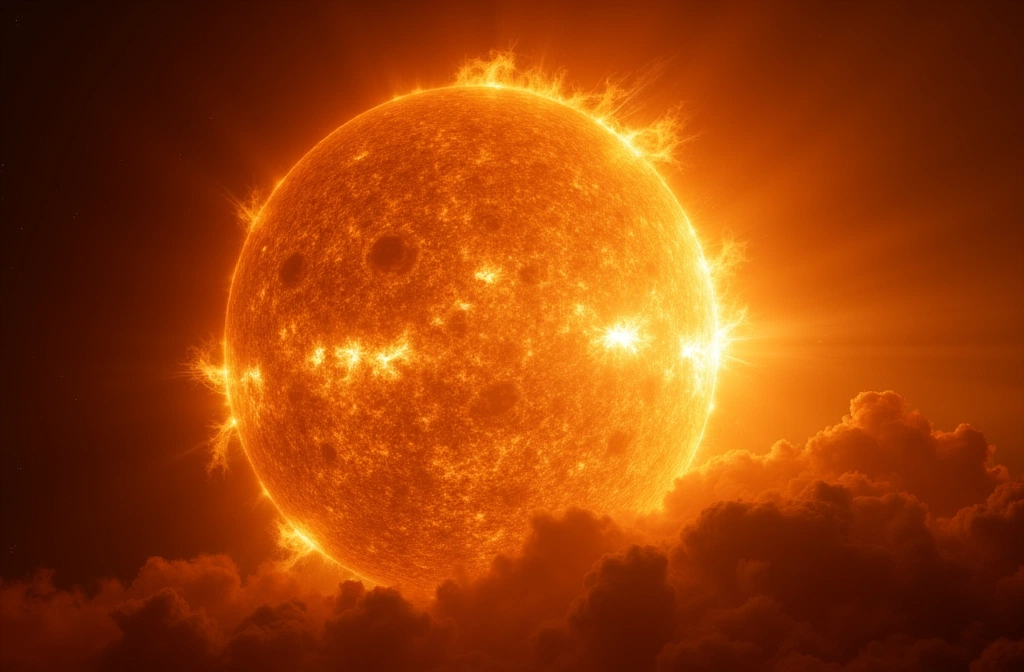
Sunspot region 4366 is currently producing significant solar flare activity and rotating into a position where coronal mass ejections (CMEs) launched from it would be more likely to be Earth-directed, according to available solar monitoring data. The timing matters: a CME arriving from this geometry would have less margin for detection and impact forecasting than events originating from less favorably-positioned regions.
Why this registers on the preparedness radar: Earth-directed CMEs can trigger geomagnetic storms that stress power grids, degrade high-frequency communications, and disrupt satellite operations. The severity depends on CME speed, density, and magnetic field orientation—factors that won't be known until impact is imminent or occurring. Regional aurora displays (visible at higher latitudes this weekend) are the visible symptom of geomagnetic disturbance, but they're not the threat. The threat is what happens to transformers, long-distance transmission lines, and GPS-dependent infrastructure during the storm itself.
The critical variable here is not whether aurora will be visible—that's low-consequence—but whether sunspot 4366 remains active and whether it produces additional flare events before rotating out of Earth-targeting geometry. A single X-class flare from this region, if CME-producing, could compress response timelines significantly. NOAA's space weather prediction center maintains real-time monitoring, but traditional grid operators and telecom providers often lack direct integration with space weather alerts, creating a lag in defensive action.
This is not a certainty event. Many active sunspot regions produce flares without Earth-directed CMEs. But the geometry has shifted from neutral to elevated risk. What to watch: NOAA space weather alerts for any X-class or strong M-class flare originating from region 4366 over the next 5-7 days. If you operate critical infrastructure or depend on communications in remote areas, this is the window to confirm backup power and offline navigation capability are functional—not theoretically sound.